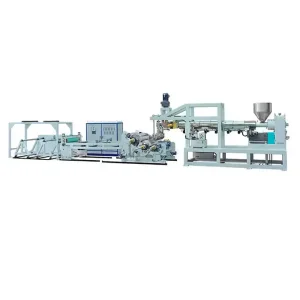
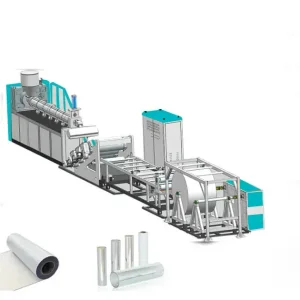
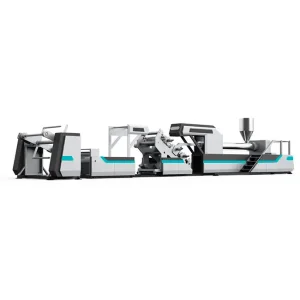
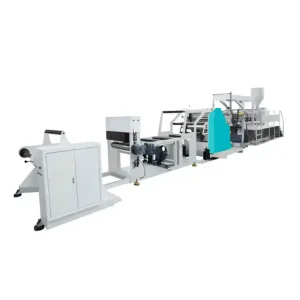
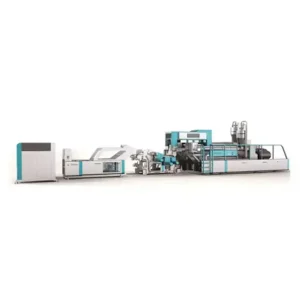
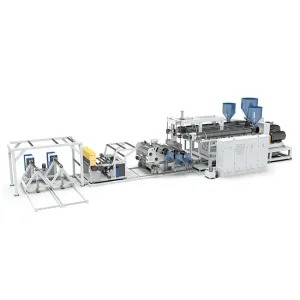
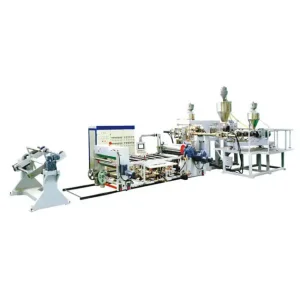
Analyzing key manufacturing requirements, technical challenges, and strategic options for modern procurement managers.
In today's highly competitive industrial manufacturing landscape, the procurement of a plastic sheet extrusion line represents a major capital expenditure that determines a factory's core operational capabilities for decades. Plastic sheet extrusion machines are the foundational systems responsible for converting raw polymeric resins—including Polypropylene (PP), Polystyrene (PS), Polyethylene (PE), Polyethylene Terephthalate (PET), and Polylactic Acid (PLA)—into flat, highly calibrated plastic sheets. These sheets subsequently serve as the primary raw feedstock for automated thermoforming systems, packaging production lines, medical trays, and consumer goods.
For global packaging and manufacturing enterprises, optimizing the extrusion stage is paramount. Standard single-layer sheet extruders supply the basic requirements for non-barrier applications, while multi-layer co-extrusion systems leverage feedblocks and multi-manifold T-dies to combine different polymers. This multi-layer architecture delivers improved mechanical strength, gas barrier properties, and optical clarity, all while allowing companies to incorporate recycled regrind material in the core layer to reduce overall raw material costs.
1. Thickness Homogeneity: Minimal gauge variance ensures downstream high-speed thermoforming lines run without tearing or structural thinning.
2. Melt Temperature Stability: Eliminates thermal degradation of sensitive polymers and ensures uniform colorant dispersion.
3. Specific Energy Consumption: Modern extruders must limit electrical overhead per kg of processed polymer using high-efficiency heating elements and AC vector drive motors.
Wenzhou Yicai Machinery Technology Co., LTD., built upon years of mechanical R&D since its founding in 2010 as Ruian Seven Star Machinery, addresses these industrial realities. Our engineering frameworks are designed to optimize output parameters, facilitate rapid resin changes, and lower total cost of ownership (TCO).
A breakdown of screw geometries, heating dynamics, calender stack configurations, and structural elements.
Equipped with 30:1 or 33:1 L/D ratio screws to ensure optimal plasticization and melt homogeneity. High-precision bimetallic barrels provide maximum wear resistance against abrasive polymers, mineral fillers, and structural regrinds.
Features an optional integrated positive-displacement melt pump to decouple pressure generation from the extruder screw. This step stabilizes pressure before the T-die, keeping gauge variations below ±1% across the sheet width.
Precision heated rolls available in vertical, horizontal, or oblique arrangements. Micro-gap adjustment mechanisms, combined with internal cooling water/oil channels, yield optimal surface finishes and prevent sheet warping.
| Extruder Type | Resin Compatibility | Screw Diameter (mm) | Max Extrusion Width (mm) | Max Output Capacity (kg/h) | Typical Downstream Application |
|---|---|---|---|---|---|
| Single-Screw Extruder (Standard) | PP / PS / PE | Φ 90 - Φ 120 | 800 - 1000 | 250 - 450 | Disposable drinking cups, food containers |
| Diagonal Single-Layer Extruder | PP / PS | Φ 85 - Φ 100 | 750 - 900 | 220 - 350 | Compact space facilities, cup thermoforming |
| Multi-Layer Co-Extrusion System | PET / PP / PS / Barrier | Φ 90 / 65 / 45 | 1000 - 1200 | 400 - 650 | Modified atmosphere packaging (MAP), high-barrier food trays |
| High-Speed PET Line (No pre-drying) | APET / RPET / CPET | Twin Screw Φ 75 / Φ 90 | 1200 | 500 - 800 | Transparent thermoformed lids, clamshell packaging |
A Solid Legacy of Engineering Excellence Since 2010
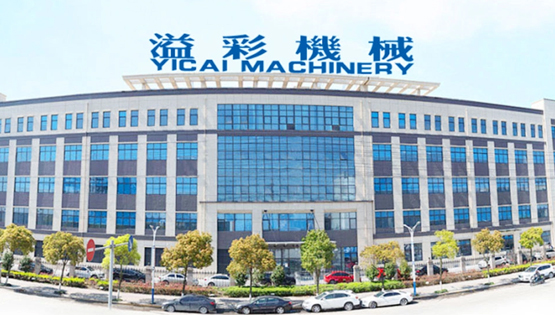
The machinery manufacturing industry is a complex, technology-intensive field that requires rigorous engineering, metallurgy, and automated control logic. Originally established in 2010 as **Ruian Seven Star Machinery**, our company transitioned to **Wenzhou Yicai Machinery Technology Co., LTD.** in 2022 to align with our expanding global operations. Based in Zhejiang Province, a key coastal manufacturing hub in East China, we operate out of a modern 3,000+ square meter facility.
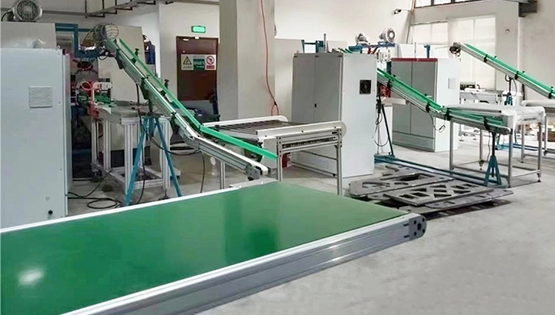
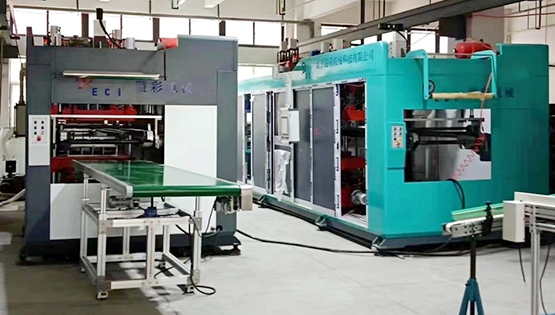
Our R&D team designs and manufactures thermoforming machines, curved offset printers, plastic sheet extruders, and auxiliary equipment. We enforce a comprehensive quality control framework that spans raw material sourcing, precision structural machining, assembly, electrical wiring, and final pre-shipment stress testing.
By integrating international components from brands like Siemens, Omron, and Schneider, we ensure our extrusion lines run reliably for manufacturing facilities worldwide.
A systematic framework built to deliver consistent mechanical performance and long-term operating support.
We configure each line based on customer requirements, including custom layouts, specific screw geometries, and tailored component arrangements to match your space constraints.
We work to advance our machinery designs from manual operations to fully automated, PLC-controlled lines to help factories improve output consistency and reduce operator error.
Our systems incorporate precise mechanical alignments and high-grade alloy components to withstand continuous mechanical stress, ensuring stable manufacturing performance.
Our sales and technical support teams work with clients during pre-sales to analyze polymer specifications, throughput demands, and processing targets before design begins.
We supply and service machinery globally, managing international logistics, custom documentation support, and commissioning protocols for seamless cross-border delivery.
We build our machines with standard parts from international suppliers (Siemens, Omron, Schneider, etc.) to simplify maintenance and ensure global availability of spare parts.
Our technical staff combines years of experience in plastic design, mechanical engineering, and control automation to provide hands-on assembly and commissioning guidance.
We offer technical assistance, machine calibration, and troubleshooting via video diagnostic and on-site engineer deployment to keep your production lines running.
Linking sheet extrusion to automated thermoforming, precision cup printing, and high-speed packaging systems.
Extruders convert virgin or regrind PP, PS, PET, or PLA resin into flat sheets with controlled thickness. Precision calender rolls polish and cool the sheet to ensure layflat characteristics and minimize internal stress.
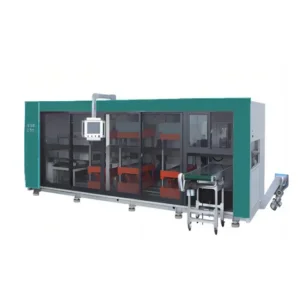
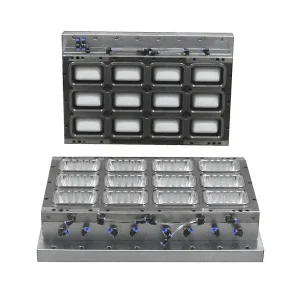
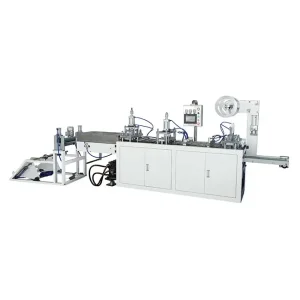
The extruded sheet is fed into multi-station thermoforming systems. Using vacuum, pressure, and plug assists, the sheet is formed into final products such as transparent cups, food trays, and lids.
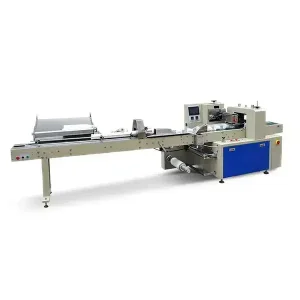
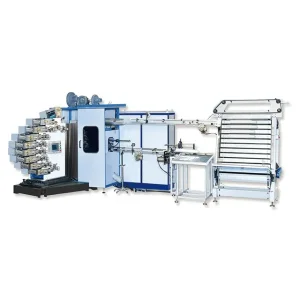
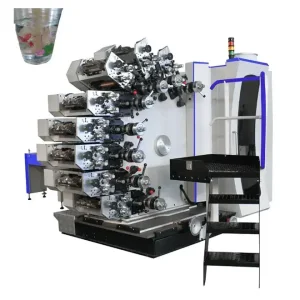
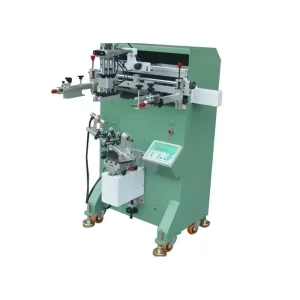
Formed articles like cups move to offset curved printers (supporting up to 8 colors) for decoration before being routed to high-speed multi-row packaging machines for retail boxing.
Our sheet extrusion lines are engineered to process materials for a wide variety of thermoformed packaging products. Common applications include:
Developing energy-efficient, automated extrusion processes to meet evolving environmental and manufacturing standards.
Modern manufacturing plants rely on data integration. Our roadmap includes connecting extruder PLC platforms to local SCADA networks via OPC-UA protocols, allowing real-time monitoring of screw torque, melt pressure, and temperature profiles.
With rising demand for sustainable packaging, we are refining screw profiles to handle bio-resins like PLA, PBAT, and starch blends. These materials require precise shear control to prevent molecular degradation during processing.
We design our newer heating and cooling stages to minimize energy loss. Utilizing induction barrel heaters and insulated covers, our machines reduce thermal radiation loss, lowering factory cooling demands and energy costs.
Exporting industrial machinery internationally requires strict compliance with safety, environmental, and engineering standards. Wenzhou Yicai Machinery aligns all manufacturing with international requirements to simplify local factory acceptance.
Our headquarters and factory are strategically located in Zhejiang, China, giving us access to deep-water ports for efficient shipping.
Answering common engineering questions regarding plastic sheet extrusion machine selection, operation, and maintenance.
 Yicai Machinery