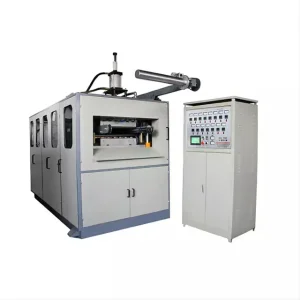
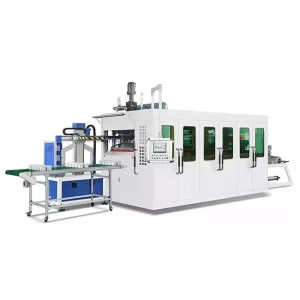
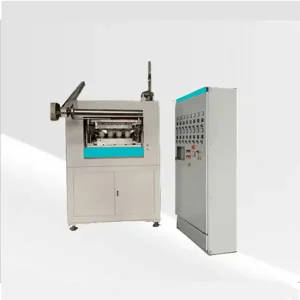
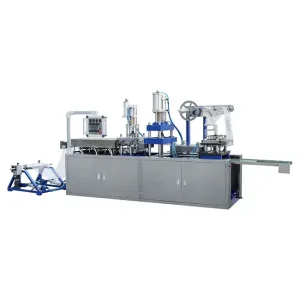
As Northern Vietnam continues to secure its position as a powerhouse for global manufacturing, Hanoi and its neighboring industrial hubs—including Bac Ninh, Hung Yen, Hai Duong, and Hai Phong—have witnessed an unprecedented surge in demand for advanced polymer processing solutions. The rapid influx of multinational electronics giants, consumer goods manufacturers, and agro-export enterprises has established a highly sophisticated ecosystem requiring strict standardization in packaging, component trays, and protective casings.
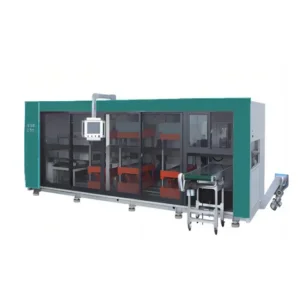
In this context, thermoforming technology has emerged as a critical manufacturing pipeline. Unlike traditional injection molding, which requires capital-intensive molds and longer cycle adjustments, thermoforming offers unmatched flexibility, rapid prototyping cycles, and highly efficient processing of thin-gauge sheets. In Hanoi's industrial zones (such as Thang Long Industrial Park, Quang Minh IP, and VSIP Bac Ninh), local manufacturers are transitioning away from semi-automated, high-energy-consumption machinery toward fully integrated multi-station servo thermoforming systems. This technological shift is crucial for meeting strict export guidelines established by free trade agreements like the EVFTA and CPTPP, where precision, raw material traceability, and minimal carbon footprints are heavily scrutinized.
Vietnam's strategic position in the "China+1" supply chain diversification has driven substantial foreign direct investment (FDI) into Hanoi and the surrounding Red River Delta. Electronics manufacturers require high-precision, anti-static (ESD) thermoformed trays to transport sensitive microchips and assembled PCBs. Concurrently, Vietnam's massive F&B sector demands sterile, food-grade barrier cups, containers, and lids. These products require thermal forming precision down to the fraction of a millimeter to guarantee airtight sealing and long-term shelf-life preservation.
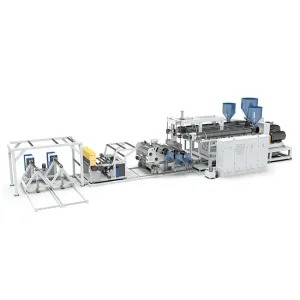
Local manufacturers face challenges related to volatile raw material costs, strict waste-reduction mandates, and high energy costs. Standard pneumatic-driven legacy machines are no longer competitive due to high air-compressor power demands and high scrap rates. Modern thermoforming technology addressing these concerns integrates online edge-trim recycling, direct co-extrusion connectivity, and precise multi-zone heating control systems to optimize raw material yields and minimize operational downtime.
The global thermoforming industry is undergoing a structural paradigm shift driven by circular economy goals and strict policies on single-use plastics. Regulatory bodies globally are enforcing mandates that require packaging to incorporate high percentages of recycled polymer content (such as rPET and rPP) or transition to fully biodegradable materials like PLA (Polylactic Acid) and starch-based resins. Processing these bio-resins and recycled materials presents significant challenges: narrower processing temperature windows, unpredictable melt strength, and differing shrinkage rates compared to virgin fossil-based polymers.
To overcome these material limitations, modern machinery relies on digital closed-loop controls, precise multi-zone ceramic or quartz heating banks, and servo-actuated plug assists. These advanced features ensure uniform material distribution even in deep-draw ratios. By implementing optimized plug-assist profiles, manufacturers can reduce raw material thickness by up to 20% while maintaining the container's structural integrity. This lightweighting technique directly reduces carbon taxes, shipping weights, and overall material consumption.
While hydraulic systems have historically driven heavy-gauge thermoforming for industrial casings and automotive interior parts, high-speed thin-gauge packaging has transitioned almost entirely to full-servo drive platforms. Servo-driven toggle systems provide absolute positioning accuracy, faster cycle times, and energy consumption savings of up to 40% compared to equivalent hydraulic machinery. Furthermore, servo systems eliminate the risk of oil-mist contamination, making them ideal for manufacturing environments with strict hygiene requirements, such as ISO Class 7 cleanrooms producing medical device packaging.
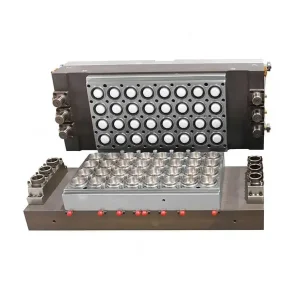
We design custom solutions tailored to your operational requirements, including custom mold geometries, color configurations, auxiliary integrations, and PLC controls.
We continuously update our equipment capabilities, transitioning from manual setups to multi-axis CNC and intelligent, fully automated multi-station thermoforming lines.
Our manufacturing processes adhere strictly to ISO 9001 and CE directives. We utilize premium, stress-relieved structural steels and high-tolerance CNC-machined components.
Our engineering experts provide detailed material compatibility reviews, energy efficiency estimates, and production cycle forecasts to guide your investment decisions.
We manufacture machinery to meet strict international standards, ensuring reliable compliance and seamless integration for global operations exporting to Europe and North America.
We source key hardware components from leading global brands—including Siemens PLCs, Schneider electronics, Yuken hydraulics, and Festo pneumatics—to ensure reliable field performance.
Our engineering, assembly, and service teams bring years of experience in polymer processing machinery design and thermoforming system engineering.
We support operations in Hanoi with onsite commissioning, operator training, rapid spare parts delivery, and remote PLC diagnostics to maximize equipment uptime.
Developing closed-loop heat profiling utilizing infrared non-contact thermal sensors to dynamically adjust power distribution across quartz heater arrays, preventing sheet sagging.
Implementing regenerative servo motor systems that capture kinetic braking energy during the mold clamping stroke, routing it back into the electrical cabinet to lower energy consumption.
Optimizing pressure and vacuum forming controls specifically for bio-based resins (PLA, PHA) and high-percentage recycled polymers (rPET), maintaining consistent processing at high cycles.
Deploying OPC UA communication interfaces to connect thermoforming machinery with enterprise MES systems, enabling real-time efficiency monitoring and predictive maintenance modeling.




Vacuum forming utilizes atmospheric pressure (approx. 1 bar) to pull the heated plastic sheet down onto a mold surface. It is highly cost-effective for large parts with moderate detail. In contrast, pressure forming utilizes compressed air (typically 4 to 6 bar) in conjunction with vacuum on the opposite side of the sheet. This dual-action force enables highly detailed molds, sharp corners, structured textures, and precise dimensional control, matching injection molding capabilities while using thinner sheets and lower tooling costs.
Uniform heat distribution across the raw sheet is critical to avoiding localized thinning or cold spots. Modern machinery utilizes multi-zone infrared heater panels (ceramic or quartz elements) managed by advanced PLC systems. Continuous thermal monitoring dynamically adjusts power output to compensate for environmental heat loss. Consistent temperature control ensures a uniform viscosity across the sheet, preventing thinning in deep-draw areas and maintaining optimal structural thickness throughout the product.
PLA (Polylactic Acid) has a narrower processing temperature window, lower thermal conductivity, and higher brittleness during de-molding than traditional PP. When designing PLA molds, you must incorporate optimized mold draft angles (typically 2 to 3 degrees minimum) and integrate intensive mold temperature control systems using water channels to accelerate crystallization. Ejection mechanisms must also be designed with larger contact surfaces to prevent product cracking during demolding.
Thermoforming thin-gauge packaging can generate up to 30% to 50% skeleton waste (scrap) post-punching. An online material crusher feeds this clean scrap directly back into the co-extrusion feed throat in a closed loop. This system reduces raw material costs by minimizing virgin resin consumption, saves floor space, and eliminates contamination risks associated with manual regrind handling, directly maximizing your plant's return on investment (ROI).
Connect with our senior technical engineering team in Hanoi to receive detailed equipment pricing, custom mold reviews, and complete packaging plant layouts.
101, Unit 1, Building 20, Zilai Industrial Park, Wanquan Town, Pingyang County, Wenzhou City, Zhejiang Province
 Yicai Machinery