 Yicai Machinery
1 / 4
| Technical Parameters | |
|---|---|
| Model | ECIGJ-500L |
| Suitable Materials | PLA, PET, PP, PVC, PS |
| Sheet Speed | 15 - 30 times / min |
| Maximum Sheet Width | 520 mm |
| Maximum Forming Depth | 80 mm |
| Maximum Forming Area | 260 mm * 450 mm |
| External Air Source | < 0.2 m³/min |
| Air Pressure | 0.6 - 0.8 Mpa |
| Total Power | 25 Kw |
| Overall Dimension | 3500 * 1150 * 1900 mm |
| Weight | 2400 Kg |
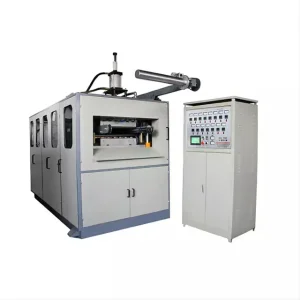
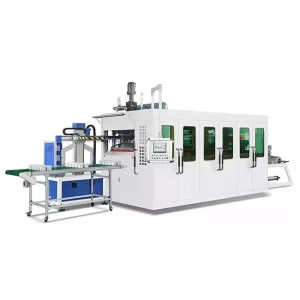
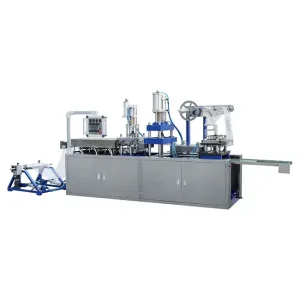
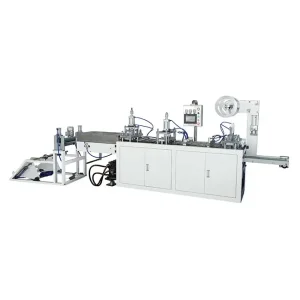
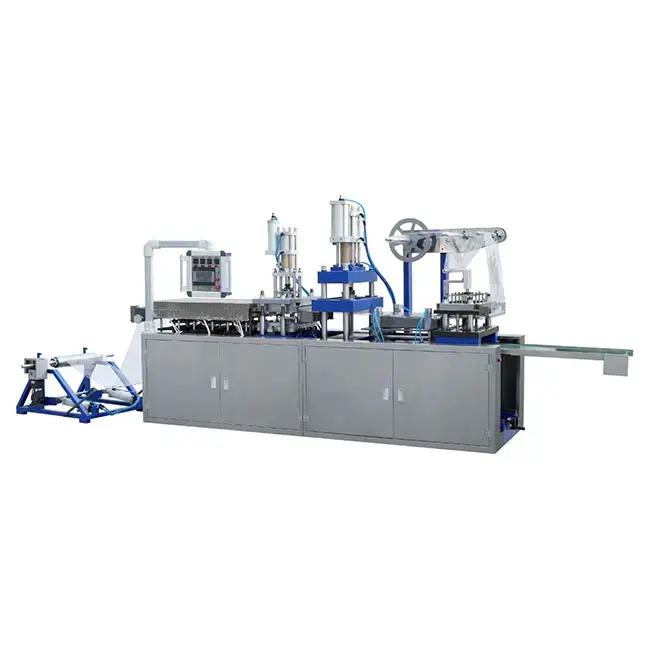
ECIGJ-500L has the following key characteristics designed for high-efficiency production:
Multiple stations operate simultaneously to produce multiple plastic cup covers at the same time, significantly improving production efficiency compared to single-station forming machines.
Operates at a fast speed of 15-30 molds per minute. Each mold yields multiple products, accommodating high-volume manufacturing needs for packaging enterprises.
Provides a wide adaptation range with a maximum molding area of 500mm*350mm, sheet width up to 520mm, and a depth up to 80mm to suit diverse product layouts.
Equipped with Delta PLC control system, servo motor, and touch screen for intelligent human-computer interaction. Incorporates Omron temperature controller and Schneider AC contactor for stable, safe, and durable operation.
This multi-station automatic disposable plastic cover thermoforming machine is commonly used in various industrial applications:
The ECIGJ-500L is compatible with a wide range of plastic materials, including PLA, PET, PP, PVC, and PS.
This machine operates at a speed of 15 to 30 cycles per minute. Since each mold can produce multiple products simultaneously, it is ideal for high-capacity mass production.
The machine supports a maximum forming depth of 80mm and a maximum forming area of 260mm * 450mm, with a maximum sheet width capacity of 520mm.
The ECIGJ-500L features high-grade components for automation, including a Delta PLC system and servo motor for the interface, an Omron temperature controller from Japan, and a Schneider AC contactor from France.
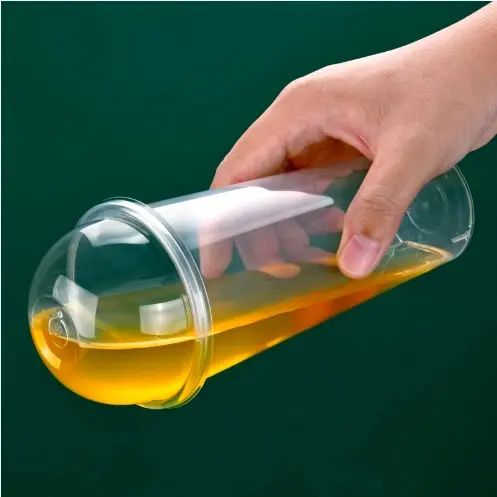
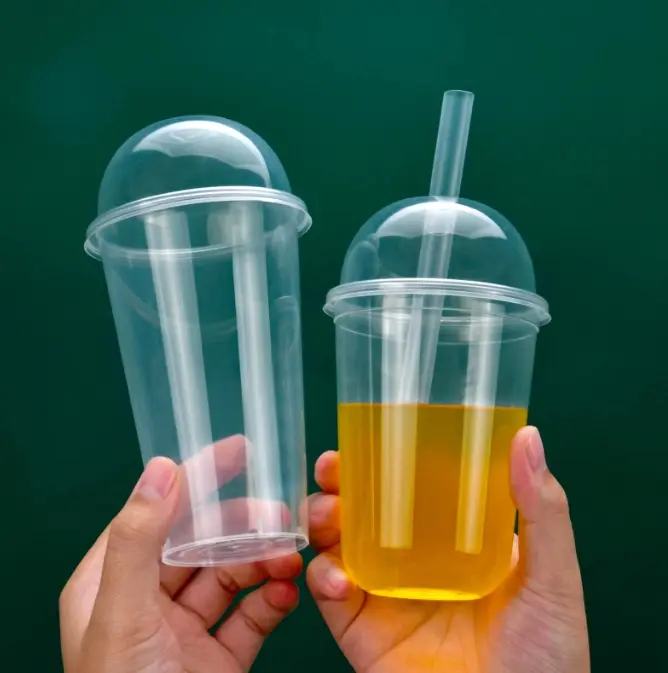
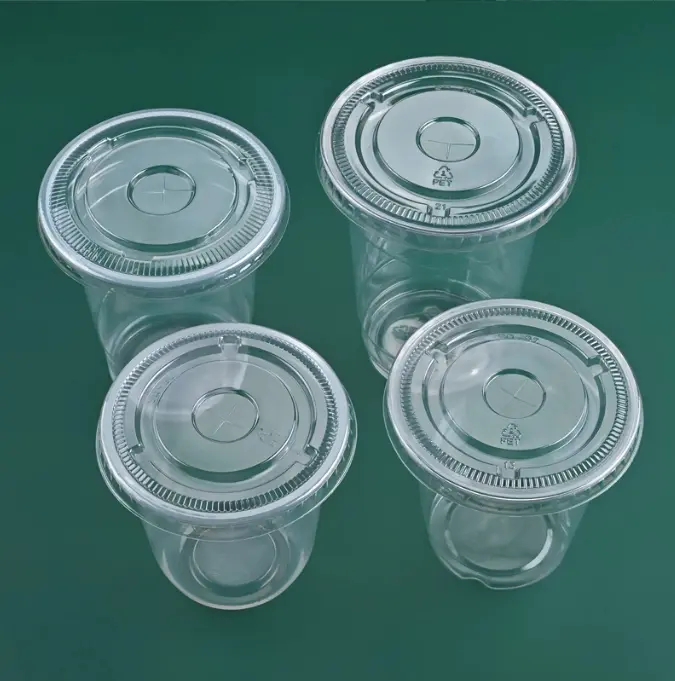
It is widely utilized in the food packaging (cup lids and beverage caps), beverage, pharmaceutical (medical caps and syringes), and cosmetics packaging industries.
The pre-prepared plastic raw materials, usually in the form of particles or sheets, are loaded into the feed port of the equipment via automated feeding systems or manually.