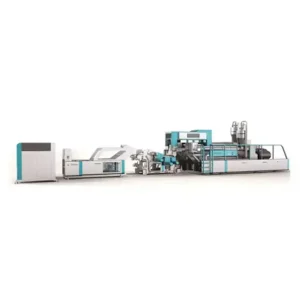
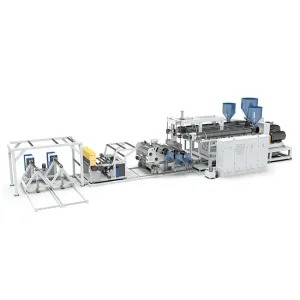
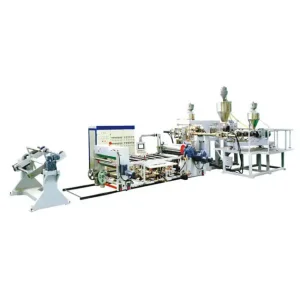
Deploying state-of-the-art single layer and diagonal extrusion machinery calibrated for high throughput and sustainable plastic raw material feeds.
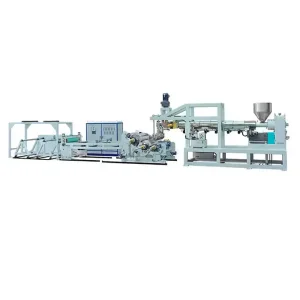
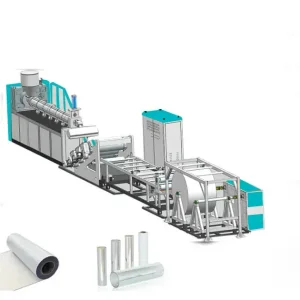
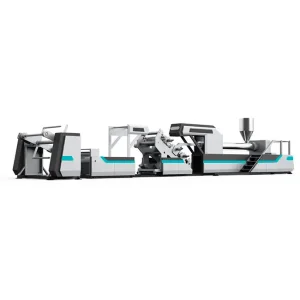
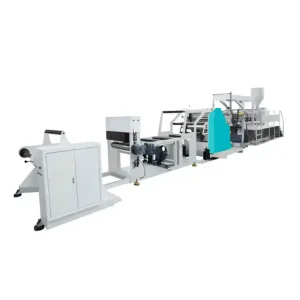
The Netherlands represents one of the most mature, heavily regulated, and technologically advanced packaging and plastics manufacturing landscapes in the European Union. Anchored by the strict guidelines of the Dutch Plastic Pact (Plastic Pact NL) and European Commission circular economy mandates, the country has shifted rapidly towards high-quality food packaging, recycled content integration (specifically rPET, rPP, and bio-based plastics such as PLA), and energy-efficient manufacturing.
Dutch plastic converters and packaging producers in critical industrial hubs like Rotterdam, North Brabant, and Twente require sheet extrusion lines capable of handling sophisticated multi-layer structures. These structures are essential to maintain barrier properties (limiting oxygen transmission rate [OTR] and moisture transmission rate [MVTR]) while simultaneously incorporating post-consumer recycled (PCR) materials. Extruders are no longer simple melt-and-form tools; they must function as high-tech thermal processors that maintain dimensional precision to feedstock downstream thermoforming units.
To meet local Dutch regulations, processing machinery must integrate advanced venting, degassing, and melt filtration technologies. Yicai Machinery's high-efficiency single and multi-layer sheet extrusion lines are engineered specifically to balance these demanding material profiles, satisfying the environmental criteria of the Benelux market without compromising physical performance or output speeds.
Across the global market, sheet extrusion technologies are evolving to support multi-layer co-extrusion (typically 3-layer, 5-layer, or 7-layer configurations). The driving mechanism is simple: sandwiching cheaper recycled polymers or specialized gas barriers (such as EVOH) between virgin skin layers to optimize costs and regulatory compliance.
Furthermore, modern manufacturing relies heavily on automated feedback loops. Using automatic T-Dies linked with non-contact beta-ray or laser thickness scanners allows for real-time lip adjustment. This reduces gauge variance down to under ±1%, ensuring that downstream thermoformers run at peak cycles without encountering jams, inconsistent heating profiles, or structural weak points in the finished cups, trays, and boxes.
For Dutch processors aiming to optimize their capital expenditure (CAPEX) without sacrificing the precision of European mechanical engineering, the integration of Wenzhou Yicai Machinery's advanced extrusion technology offers a powerful solution. Located in Zhejiang's premier packaging machinery cluster (Wenzhou/Ruian), Yicai utilizes a complete local vertical supply chain.
The absolute cost-efficiency of Chinese manufacturing, paired with rigorous quality control systems, means Dutch companies can obtain advanced machinery at a rate that allows for a rapid return on investment (ROI). This capital flexibility enables manufacturers to scale up processing capacities and adapt to changing market requirements more effectively.
Understanding user intent requires aligning sheet extrusion configurations with specific commercial applications. In the Netherlands, three primary sectors dominate the request pipelines:
The Netherlands is the global epicenter of flower exports. This requires billions of seedling pots, transportation trays, and retail display trays. These products are usually formed from thin-gauge polystyrene (PS) or polypropylene (PP) sheets. Extruders serving this sector must deliver high-speed throughput of highly filled, cost-effective sheets (often containing calcium carbonate fillers) without screw wear or melt inconsistency.
High-barrier multi-layer sheets are essential for packaging Dutch cheeses, yogurts, and prepared meals. To prevent contamination and extend shelf-life, co-extrusion systems utilize structure layers like PP/EVOH/PP or PET/PE. The precision of the feedblock and the stability of the melt pump are critical to ensure that barrier layers remain continuous and do not thin out during downstream thermoforming.
With the transition toward compostable and highly recyclable drinking containers, sheet machines must process PLA (Polylactic Acid) and rPET. These materials are highly sensitive to moisture and heat, requiring specialized venting configurations on the extruder barrel to prevent polymer chain degradation and preserve mechanical properties and clarity.
Established in 2010 (originally operating under the name Ruian Seven Star Machinery), Yicai Machinery has developed into a leading manufacturer of plastic sheet extrusion lines, thermoforming machines, and multi-color printing equipment. Our modern facility, spanning over 3,000 square meters, supports custom design, engineering, and manufacturing.
We operate under a win-win business philosophy, developing solutions that meet strict international standards. Our systems are configured to integrate seamlessly with downstream packaging equipment, creating a smooth transition from raw polymer to printed, finished product.
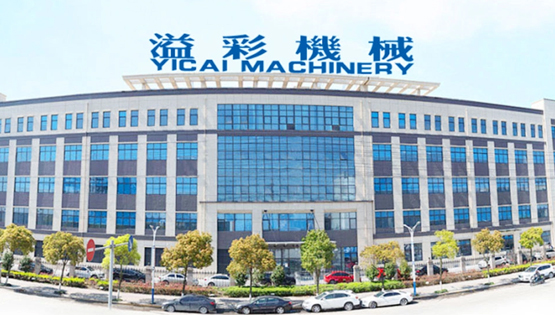
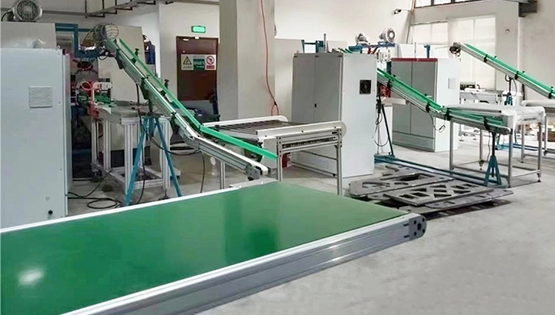
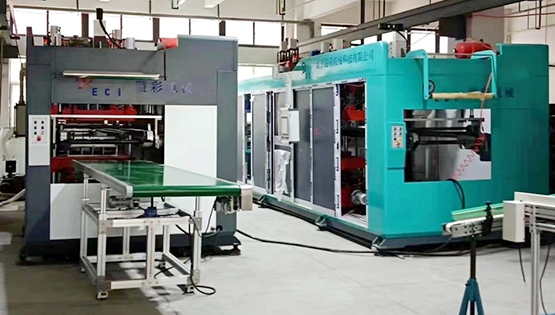
From customized screw profiles and custom color coordination to complete downstream integration, we build lines tailored to your exact resin parameters and space constraints.
We source critical components from premium manufacturers (including Omron, Siemens, Schneider, and NSK) to ensure durability, simple maintenance, and part replacement.
We offer remote diagnostic support, virtual commissioning, and on-site setup to assist Dutch and Western European operators through installation and operation.
Importing large-scale machinery from China to the Netherlands requires attention to logistical and technical details. Yicai Machinery has developed a structured process to ensure smooth delivery from our Wenzhou factory to the Port of Rotterdam:
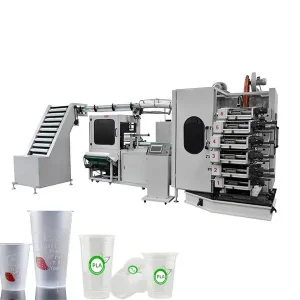
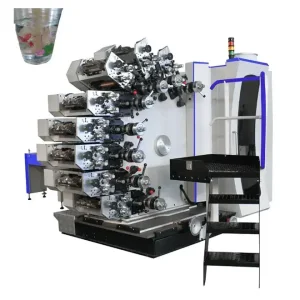
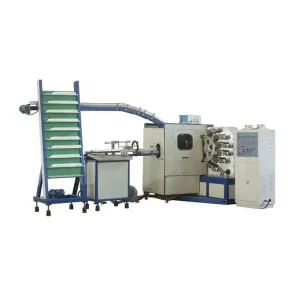
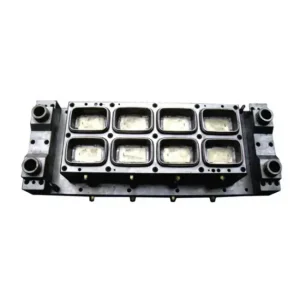
Integrating sheet manufacturing with high-capacity printing, forming, and mold systems for complete production setups.
 Yicai Machinery