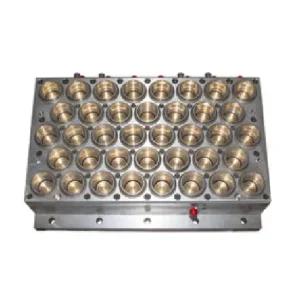
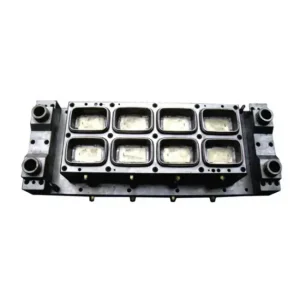
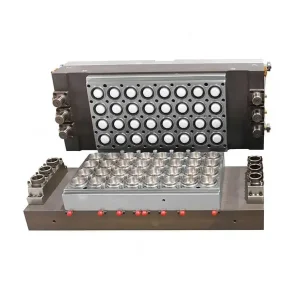
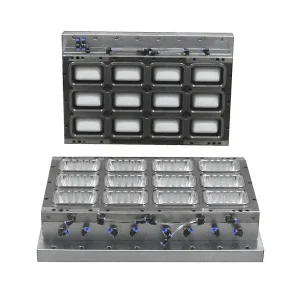
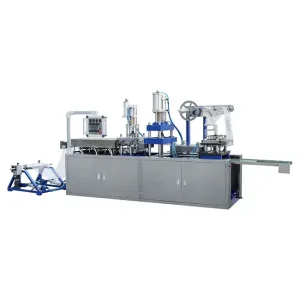
Premium grade thermoforming mold assemblies engineered for high-precision replication and optimized cycle times in high-speed production lines.
Singapore has long stood as Southeast Asia's preeminent financial and high-tech manufacturing hub. Within its robust industrial ecosystem, the packaging sector is undergoing a massive transformation. Driven by the Singapore Green Plan 2030 and stringent environmental standards mandated by the National Environment Agency (NEA), local packaging producers and food & beverage conglomerates are rapidly pivoting from legacy single-use plastics to highly recyclable, bio-degradable, and thin-gauge barrier polymers.
This pivot requires advanced thermoforming equipment and, critically, high-precision thermoforming molds capable of handling demanding polymer matrices. Materials such as Polyethylene Terephthalate (PET), Polypropylene (PP), Polylactic Acid (PLA), and high-barrier multi-layer films possess distinct thermal windows and shrinkage behaviors. To produce uniform, defect-free plastic cups, boxes, and lids, Singaporean manufacturers seek out precision toolmakers who understand conformal cooling dynamics and multi-cavity co-extrusion setups.
Operating costs in Singapore—particularly industrial electricity, labor, and real estate—are exceptionally high. Consequently, packaging companies cannot afford production downtime, component wear, or slow cycle times. High-quality thermoforming molds machined from premium ALUMOLD alloys or hardened P20/H13 steel ensure optimal heat transfer, minimized cycle duration, and service lives that scale into tens of millions of cycles.
Modern food processing, medical packaging, and consumer products sectors require more than just a metal cavity. Successful manufacturers implement fully integrated production lines where the plastic sheet extrusion machine, thermoforming press, mold, and downstream packaging automation operate as a singular cyber-physical system. In Singapore's biomedical hub (Tuas Biomedical Park), thermoforming molds must comply with cleanroom standards (Class 10,000 / ISO 7) to manufacture sterile medical trays and pill packs, making high-spec CNC finish and corrosion-resistant coatings mandatory.
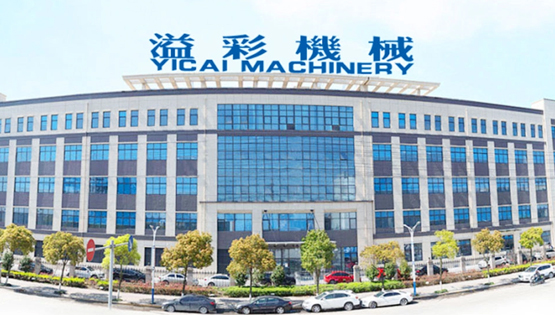
Founded in 2010 as "Ruian Seven Star Machinery" and rebranded to Wenzhou Yicai Machinery Technology Co., LTD. in 2022, we have established ourselves as a technological leader in the manufacture of plastic sheet extrusion lines, high-speed thermoforming machinery, offset cup printers, and custom thermoforming molds. Our headquarters in Zhejiang Province leverages China's premier industrial supply chain cluster, allowing us to combine cost efficiencies with world-class engineering.
For the Singaporean market, the value proposition of choosing Wenzhou Yicai centers on our Sino-Singapore Supply Chain Integration. We design and manufacture molds utilizing advanced 5-axis CNC machining centers, slow-feed wire EDM, and coordinates-measuring machines (CMM) to guarantee tolerance limits within ±0.01mm. By purchasing directly from our China factory, Singaporean companies bypass intermediary markups while obtaining molds built with international-grade components (SMC pneumatics, Siemens PLCs, and Yaskawa servo drives).
Our technical R&D department concentrates on three critical engineering facets to optimize customer ROI:
Unlike straight-drilled cooling channels, our molds use contoured cooling circuits mapped perfectly to the product's geometry. This minimizes hot spots, ensures uniform shrinkage, and shaves up to 25% off cycle times.
For high-capacity packaging lines, we design in-mold trimming solutions that guarantee a burr-free edge. This reduces subsequent handling stages, improves hygienic integrity, and lowers material waste ratios.
Molds are subjected to hard-anodizing, chrome plating, or PTFE coatings to limit coefficient friction, ensuring effortless container release and reducing dust particle formation on medical or food containers.
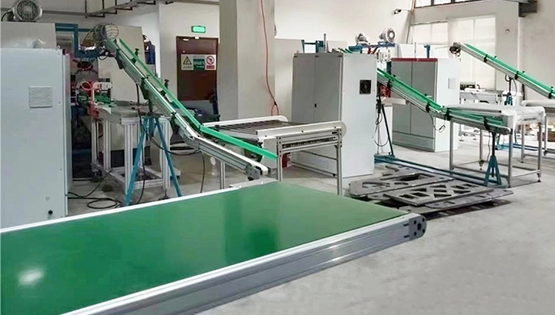
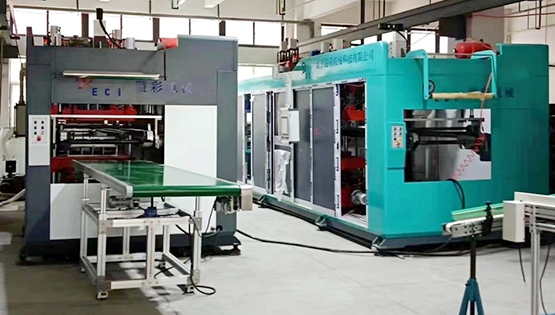
A glimpse into our advanced CNC machining zones, quality testing laboratories, and technical assembly facility located in Zhejiang, China.
Singapore's status as a regional cold-chain and ready-to-eat meal hub places extreme performance demands on food packaging. Rigid plastic trays, hinged-lid boxes, and multi-compartment containers must withstand microwave heating, blast freezing, and top-load transport stresses.
As material costs rise and plastic taxes gain traction internationally, "lightweighting"—reducing the thickness of the plastic sheet while maintaining part rigidity—has become paramount. Wenzhou Yicai designs molds featuring specialized plug-assist geometries. By integrating vacuum channels and dynamic pre-blow air pressures, we ensure optimal polymer distribution into corners and deep-draw walls.
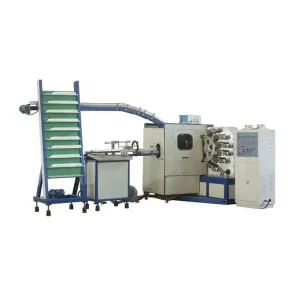
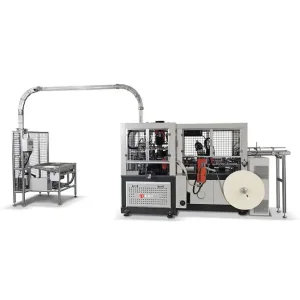
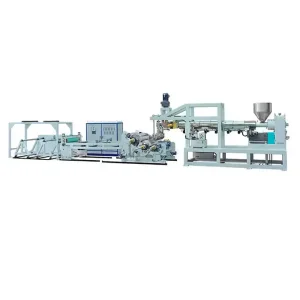
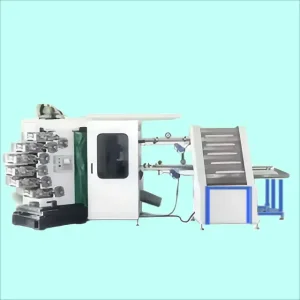
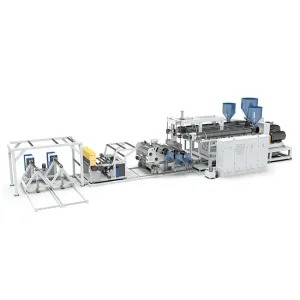
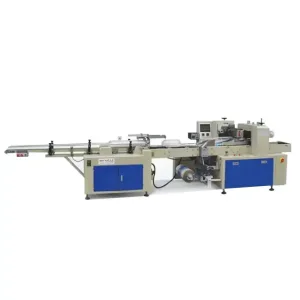
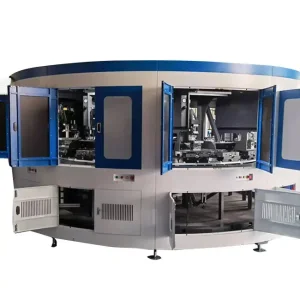
Explore our industrial-grade extrusion systems, offset printing machinery, and secondary packing lines for high-volume automated manufacturing.
Clear, authoritative answers regarding mold metallurgy, cycle efficiencies, logistics, and integration protocols for Singaporean buyers.
Selecting a tooling partner is a multi-million-dollar decision that shapes your production economics for years. Procurement managers in Singapore must evaluate partners not just on initial acquisition cost, but on Total Cost of Ownership (TCO). A slightly cheaper mold that causes flashing, requires frequent regrinding, or prolongs cycle times by a split second can lose you tens of thousands of dollars in lost productivity.
Wenzhou Yicai Machinery aligns with the highest international manufacturing standards. By sourcing from us, you secure industrial-grade tooling with conformal cooling, premium wear resistance, and precise parting lines. Our comprehensive support spans design, CAD modeling, steel sourcing, precision CNC machining, factory test runs, and final logistics. We invite packaging plants and distributor partners in Singapore to experience Wenzhou Yicai's dedication to engineering excellence.
Discuss your specifications, material needs, and production targets with our technical department.
Send Inquiry Now Yicai Machinery