Highly optimized auxiliary equipment supporting Spain's rigid packaging and extrusion industry
The Spanish plastic packaging and processing market has entered an era of profound structural transformation. Spurred by national environmental legislations, specifically the Spanish Royal Decree 1055/2022 on packaging and packaging waste and the localized Special Tax on Non-Reusable Plastic Packaging (introduced in January 2023 at €0.45 per kilogram of virgin plastic), manufacturers across industrial hubs like Catalonia, the Valencian Community, Murcia, and the Basque Country are facing intense pressure. The industry is rapidly pivoting from high-volume virgin polymer processing to closed-loop, highly automated manufacturing utilizing high-percentage post-consumer recycled (PCR) content, bio-based polymers (like PLA), and optimized inline processing technologies.
In this context, the role of auxiliary equipment suppliers has transitioned from providing secondary, independent units to delivering fully integrated, smart system controls that act as the backbone of zero-waste extrusion and thermoforming production lines. High-speed inline scrap crushers, precise multi-layer co-extrusion control mechanisms, and automated single and multi-row downstream cup packaging systems are no longer options; they are vital determinants of raw material yield, compliance metrics, and operational margin security.
SEO Insights & Industry Intelligence: Spain’s rigid plastic packaging manufacturers require auxiliary machinery that allows immediate regrind utilization without thermal degradation. Direct online crushers linked to sheet extruders prevent material oxidation, ensuring the recycled content retains the mechanical properties required to meet strict European food safety guidelines.
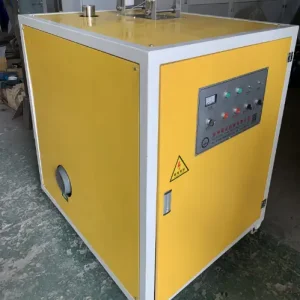
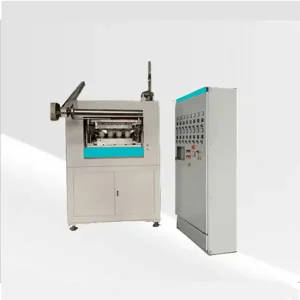
The modern thermoforming cycle produces considerable edge trim, often accounting for 15% to 35% of the total raw sheet web. In a market like Spain, where raw virgin polymers are heavily taxed and polymer price volatility impacts balance sheets, immediate recovery is essential. Wenzhou Yicai Machinery Technology Co., LTD. engineers inline scrap granulators and crushers that run synchronously with multi-station thermoforming lines and sheet extrusion plants.
Traditional offline shredding exposes polymers to moisture, dust contamination, and thermal degradation through multiple heating cycles. Our online crushing units are designed to pull the hot edge trim directly from the thermoformer's matrix shear station, process it into uniform regrind, and feed it via a closed-loop pneumatic vacuum loader back into the main extruder hopper. This zero-moisture, zero-ambient-exposure recovery cycle keeps physical polymer properties intact, allowing up to 40% regrind feeding rates without compromising mechanical tensile strength or optical clarity of the finished PET, PP, or PS sheets.
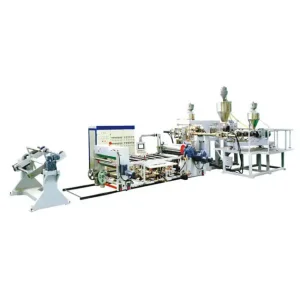
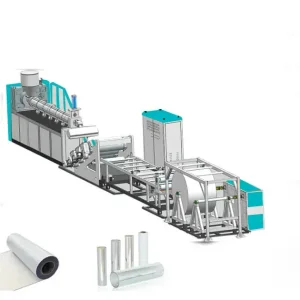
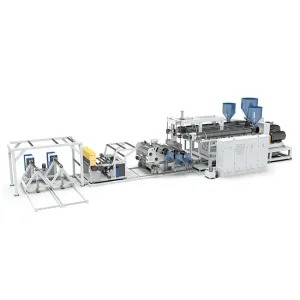
The demand for multi-layer sheet materials in Spain is driven heavily by the agriculture and meat preservation sectors (e.g., Iberico ham packaging, fresh produce trays in Almería). High-barrier packaging requires distinct polymer layers (PP/EVOH/PP or PET/PE/PET). Wenzhou Yicai’s Multi-layer Co-extruded Sheet Machine allows precise control over layer thickness ratios. Our feedblock geometry is engineered using advanced flow-simulation software to prevent polymer co-extrusion defects such as interfacial waves, ensuring uniform thickness across the entire sheet profile, which is critical for downstream high-precision thermoforming.
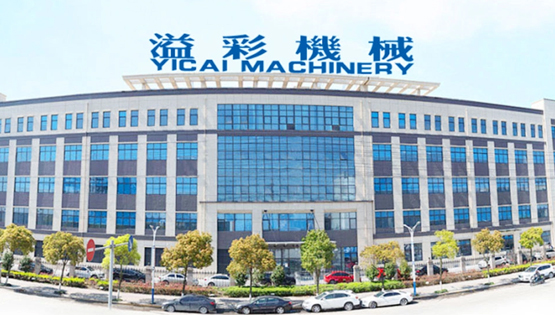
Wenzhou Yicai Machinery Technology Co., LTD., established in 2010 (formerly known as Ruian Seven Star Machinery and restructured in 2022 to represent our global technological reach), occupies a state-of-the-art 3000㎡ manufacturing facility in Zhejiang Province, China. This location sits in the heart of East China’s manufacturing cluster, providing us direct access to high-grade steel, world-class precision CNC component machining centers, and an integrated supply chain containing premium component suppliers (such as Siemens PLC systems, Omron thermal control units, and robust hydraulic assemblies).
We bridge the geographical distance to the Spanish market by offering a standardized, professional, and transparent logistics and support model:
Compliance & Safety Note: Our design process integrates strict safety criteria. From dual-channel safety relays to physical interlocks on all access points, we make sure that our machinery satisfies the inspection protocols of Spanish occupational health and safety regulators (INSST).
The modern Spanish plastics sector is characterized by a high degree of integration and automation. Industry 4.0 paradigms are reshaping how factories operate. Wenzhou Yicai integrates continuous monitoring, remote diagnostic capabilities, and automated process control into its core machinery offerings. This integration reduces dependency on manual labor, speeds up machine startup times, and minimizes scrap generation during material changes.
Our thermoforming and packaging lines feature localized control via Siemens or Delta PLC human-machine interfaces (HMIs). Through secure VPN router modules, our engineers in Wenzhou can perform remote diagnostic analysis, inspect sensor values, and update firmware profiles online for clients based in Madrid, Valencia, or Seville, significantly reducing troubleshooting downtime.
Traditional pneumatic and hydraulic drive systems suffer from energy losses and potential hydraulic fluid contamination. In response to Spain’s rising industrial energy costs, Yicai Machinery uses advanced servo drives for film feeding, plug assist movements, and sheet cutting. Servo technology delivers highly repeatable positioning accuracy (within ±0.15mm), reduced cycle times, and up to 30% energy savings compared to conventional pneumatic designs.
To demonstrate the real-world performance of Wenzhou Yicai equipment, we examine two primary application configurations commonly found in Spanish packaging and distribution lines:
Spanish agricultural packaging providers require high-clarity PET trays with clean venting holes. An integrated setup consisting of our Multi-layer Plastic Sheet Extruder, a high-precision multi-station thermoforming machine, and an inline edge-trim crusher allows continuous production of food-safe trays using up to 50% post-industrial recycled PET flakes. This system meets Spain's strict food contact safety regulations while maintaining competitive packaging prices.
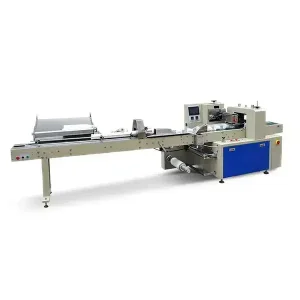
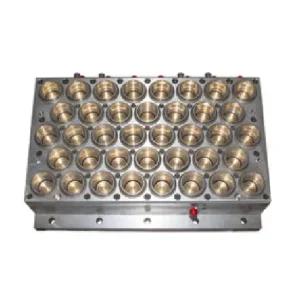
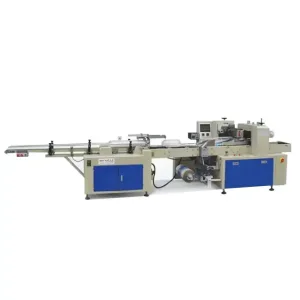
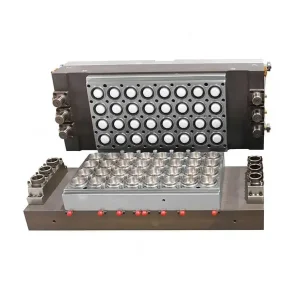
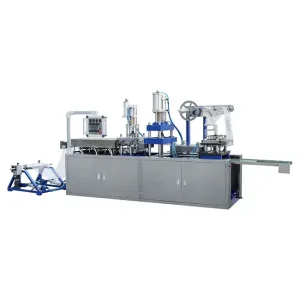
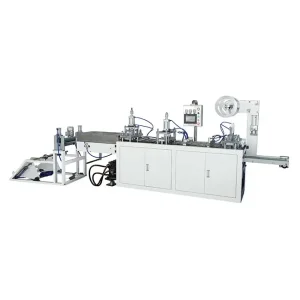
To meet the high production demands of dairy packaging (like yogurt and dessert cups), Spanish manufacturers rely on high-cavity thermoforming molds and automated downstream packaging. Our cup-making thermoforming lines integrate directly with our Single-Row and Double-Row cup packaging machines, packaging up to 120 cups per minute in a single line. This setup minimizes manual handling, ensuring hygiene standards are met while reducing labor costs.
Eight pillars of our commitment to excellence, quality, and mutual growth
We develop tailored program options according to Spanish customer specifications, including custom logo design, machinery color schemes, and specialized components configuration.
With equipment deployed in factories worldwide, we bring a global vision and the necessary logistics resources to support international trade and distribution across Spain.
We continuously invest in R&D, refining our designs from semi-automatic systems to fully automated, servo-driven, intelligent processing lines.
We build our machinery with components from trusted international suppliers, minimizing operational risks and maximizing equipment reliability.
Adhering to strict international quality management standards, our machinery is engineered for stability, durability, and high throughput.
Our team of experienced sales representatives, technical support engineers, and R&D personnel is ready to assist you through every stage of your project.
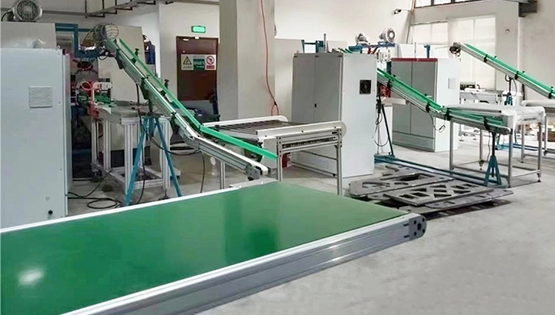
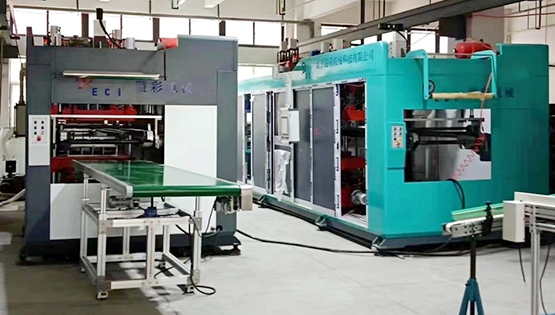
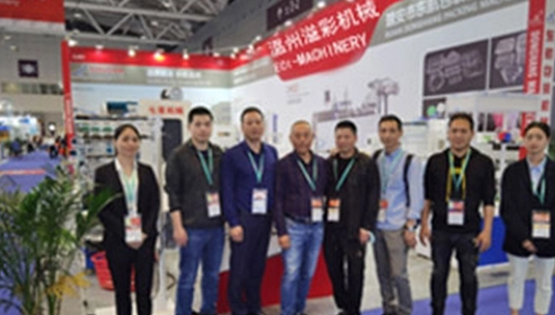
Explore Wenzhou Yicai Machinery's manufacturing facilities and technology hubs
Addressing technical, regulatory, and logistics queries for Spanish operators
Our systems are specifically optimized to handle high ratios of recycled materials (such as rPET and rPP) and biodegradable options like PLA. Our inline crushers and multi-layer co-extrusion feedblocks allow Spanish plants to feed edge trim and clean scrap directly back into the production cycle, minimizing the use of taxed virgin plastic polymers.
Yes. All auxiliary and core machinery exported to Spain and the wider EU market is CE certified. We build electrical panels to match local European voltage standards (typically 400V, 50Hz, 3-Phase), use safety guards with interlock sensors, and include Spanish-translated operating manuals and safety instructions.
Manufacturing typically ranges from 45 to 60 days, depending on customization requirements (such as complex molds or automated downstream lines). Transit from Ningbo or Shanghai port to the ports of Valencia, Barcelona, or Algeciras takes approximately 30 to 35 days. We provide comprehensive documentation, including bills of lading, packing lists, commercial invoices, and CE conformity certificates, to assist your customs broker.
We provide remote diagnostic support via integrated PLC VPN connection modules, allowing our engineers to assist with troubleshooting and software optimization. For hardware components, we use standard, internationally recognized brands (such as Siemens, Schneider, and Omron) that are easily sourced in Spain. Custom mechanical parts can be shipped via express courier (DHL/FedEx) within 3 to 5 business days.
High-capacity equipment engineered for processing facilities across Spain
Get a comprehensive quotation, customized system design recommendations, or speak directly with our Spain market sales coordinator.
Send us your specific sheet dimensions, production speed targets, and polymer recipes. Our engineering team will return a customized system diagram and line layout suggestion within 24 business hours.
Send Inquiry Now Yicai Machinery