Choosing the best Plastic Cutting Machine manufacturer in China requires more than comparing prices on a website. Buyers should examine production experience, engineering capability, machine accuracy, and after-sales support. A reliable manufacturer can explain cutting tolerances, blade materials, feeding systems, motor performance, and safety protection in clear language. Vague promises deserve caution.
Look closely at the factory behind the quotation. Does it show real assembly lines, testing areas, and finished machines? Can its engineers discuss your material, thickness range, cutting width, and daily workload? These details matter when processing plastic sheets, films, pipes, or recycled boards. A practical evaluation may include sample cutting. Send the manufacturer your material and review the cut edge, speed, noise, and waste. Small differences become expensive over time.
Certifications and inspection records also support a trustworthy decision. However, a certificate alone does not prove long-term performance. Ask for installation guidance, spare-parts availability, remote support, and customer references from similar industries. A strong supplier should provide precise specifications rather than attractive but incomplete figures. Warranty terms must be readable.
No ranking is perfect. Manufacturing quality can change between models, production batches, and service teams. Buyers should verify current information directly and document every technical agreement. My experience suggests that the best choice is not always the cheapest machine. It is the manufacturer that combines stable performance, honest communication, practical customization, and dependable support after delivery. A careful comparison protects both production efficiency and investment value.
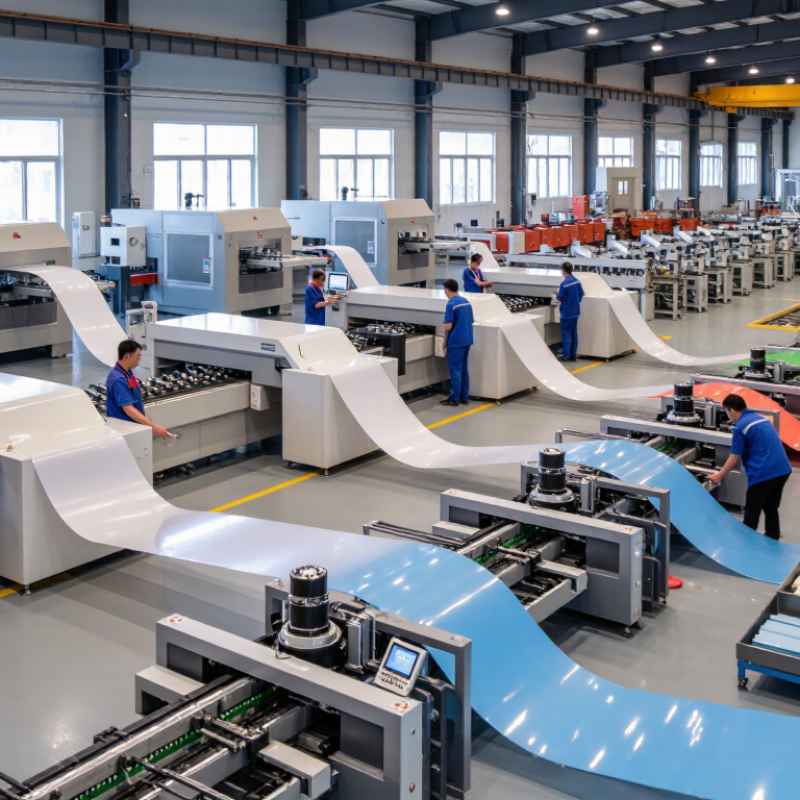
A plastic cutting machine uses a controlled blade, heated wire, or rotary tool to separate plastic sheets, pipes, films, and molded parts. The best cutting method depends on thickness, hardness, shape, and heat sensitivity. It sounds simple. In practice, material behavior matters.
During operation, the machine clamps or positions the plastic, then moves the cutting element along a programmed path. A cold blade creates a clean edge on many thin sheets. A heated blade can cut foam or thermoplastic materials while reducing force. CNC systems use motors, sensors, and software to control speed and movement. Skilled operators still check the first piece by hand.
A reliable machine should offer stable feeding, adjustable speed, emergency stopping, and clear guarding around moving parts. Dust extraction is important when cutting materials that create fine particles. Excessive heat may melt an edge, while excessive pressure can crack brittle plastic. Neither problem always appears in the first test.
When evaluating manufacturers in China, buyers should request sample cuts, material compatibility data, electrical specifications, and maintenance guidance. A factory visit or video inspection can reveal practical details that brochures omit. Certifications help, but they do not replace testing. One honest limitation remains: no single machine performs perfectly across every plastic type, thickness, and production speed. Careful trials usually expose that gap before installation.
Common types include CNC knife cutters, guillotine cutters, slitting machines, laser cutters, ultrasonic cutters, and hot-wire cutters. A CNC knife cutter suits films, foam, PVC sheets, and flexible plastics. Guillotine cutters handle thick boards or stacked sheets. Slitting machines divide plastic rolls into narrower widths.
Laser cutting machines can produce detailed shapes in acrylic, PET, and selected thermoplastic sheets. However, heat may discolor edges or create unwanted fumes. Check the material first. A test cut is essential.
Consider material thickness, flexibility, tolerance, output volume, and edge requirements. Knife cutters avoid melting. Ultrasonic cutters use high-frequency vibration and reduce direct blade pressure. Hot-wire cutters work well with lightweight foam and insulation panels. No single machine fits everything.
Request quality-management certification, electrical safety documents, and traceable inspection records. Destination-market compliance evidence may also be necessary. Ask about guarding, emergency stops, grounding, and operator protection. Paperwork matters. Still, documents do not replace testing.
Send actual plastic samples, including rigid sheets and flexible films. Run at least three identical trials. Measure edge smoothness, burrs, waste, cycle time, and repeatability. Record the material thickness and cutting settings. One perfect cut proves little.
Useful systems support recipe storage, fault warnings, production data, and controlled user access. Stable servo response and repeatable positioning are important. Ask whether operators can adjust recipes without creating accidental errors. That part is easy to overlook.
Confirm blade life, replacement-part availability, calibration methods, and maintenance intervals. Request wiring diagrams and training records. Inspect blade adjustment areas and cable routing. Difficult cleaning access can slow production. I might underestimate this issue.
Factories may connect granulators or shredders with cutting equipment for rejected plastic parts. These systems are different from sheet cutters. Check dust control, material flow, and storage space before integration. A connected line may look efficient. It can also create more maintenance work.
A Plastic Cutting Machine is designed to cut, trim, or shape plastic sheets, films, pipes, profiles, and other plastic materials with speed and accuracy. Depending on the application, Chinese manufacturers produce several types, including blade cutters, rotary cutters, laser systems, CNC routers, and machines for automatic sheet or pipe processing. Each type offers different advantages in terms of material compatibility, cutting precision, production speed, and operating cost.
To identify the best Chinese manufacturers, buyers should evaluate engineering experience, machine stability, customization ability, quality control, and after-sales support. Important technologies include CNC control, automated feeding, safety protection, dust or waste management, and energy-efficient operation. Buyers should also compare cutting accuracy, component quality, warranty terms, spare-parts availability, installation guidance, and operator training. A reliable supplier should provide clear technical specifications, transparent pricing, practical export experience, secure packaging, and effective communication throughout the purchasing and delivery process.

 Yicai Machinery