Why Invest in a Food Box Making Machine?
Food packaging is becoming faster, smarter, and more demanding. A Food Box Making Machine can convert printed paperboard into accurate boxes with fewer manual steps. It supports folding, gluing, cutting, and quality control on one production line. That matters when packaging must protect sandwiches, bakery items, frozen meals, or takeaway portions.
Industry data shows why this investment deserves attention. FEFCO reported that European corrugated packaging production reached about 48.1 billion square metres in 2023. The Smithers report, The Future of Paper-Based Packaging to 2028, also identifies continued growth in recyclable paperboard applications. Meanwhile, PMMI’s food packaging research highlights labor pressure, automation, and sustainability as major equipment decisions. These trends do not guarantee profit. They reveal a direction.
A practical machine can reduce repetitive handling and improve box consistency. Imagine a retail carton leaving the folder-gluer with clean corners, stable dimensions, and less adhesive waste. Small improvements become meaningful across thousands of boxes. Still, speed alone is not enough. Poor material matching can create jams, weak seams, and expensive downtime.
Luciana Pellegrino, a respected packaging-industry expert and president of the World Packaging Organisation, describes packaging as “a bridge between the product and the consumer.” Her point applies directly here. A machine is not merely metal and motors. It influences presentation, protection, labor use, and environmental performance.
The difficult question is simple: will the machine fit your actual orders? Product sizes, board thickness, changeover time, maintenance skills, and energy use must be examined honestly. Investment can be wise. It can also be premature. A careful evaluation makes the difference.
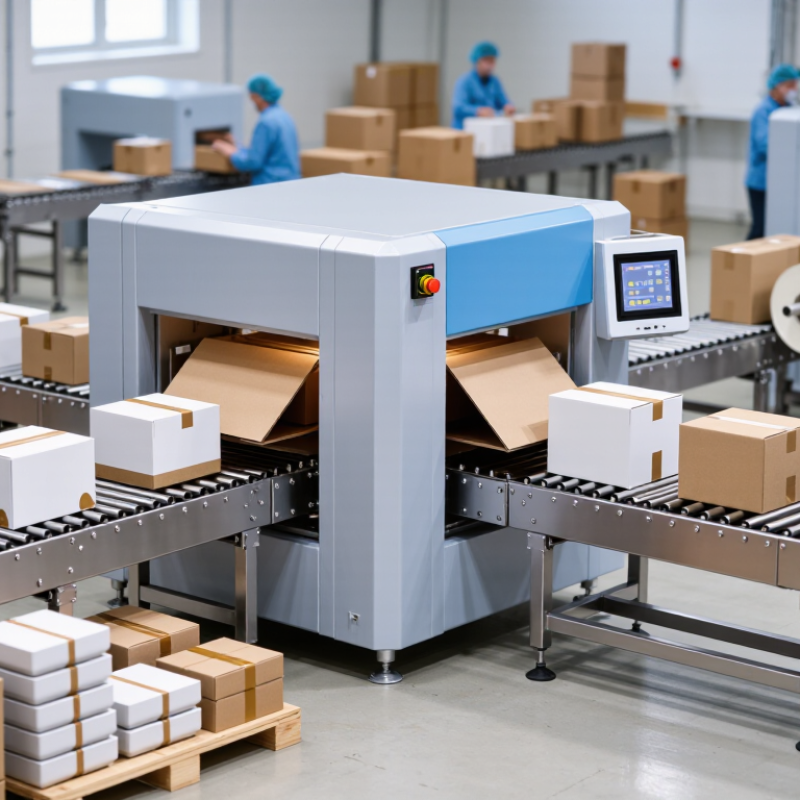
A food box making machine is industrial equipment that converts paperboard, corrugated sheets, or approved coated materials into folded food containers. It usually performs feeding, printing, creasing, cutting, folding, and gluing in a controlled sequence. Some machines produce takeaway boxes, bakery cartons, meal trays, or folding cartons. The final shape depends on the cutting die and box design. Operators must check dimensions carefully because a small crease error can weaken the finished box.
From practical production experience, the machine improves consistency more than speed alone. It can create hundreds or thousands of uniform boxes with accurate folds and clean edges. This helps food businesses reduce manual labor and control packaging costs. However, output depends on material quality, machine settings, and operator training. Poorly stored board may warp, jam the feeder, or create uneven folds. Food-contact materials also require reliable documentation and suitable inks, coatings, and adhesives. These details should never be assumed.
Tips: Check the material range before purchasing. Test several box sizes during a sample run. Inspect glue lines, corners, and folding accuracy. Keep cutting tools sharp and clean. Record adjustments for repeat orders. I have found that operators sometimes focus on maximum speed too early. That creates waste and hides mechanical problems. A slower trial often reveals more useful information. Safety guards, cleaning routines, and regular maintenance also deserve attention, even when production pressure is high.
A food box making machine converts printed paperboard into finished packaging through feeding, die-cutting, creasing, folding, gluing, and quality inspection. Typical industrial output varies by box structure, board thickness, size, and automation level. Higher automation can improve production consistency, reduce manual handling, and support large-volume packaging orders.
The chart shows representative industrial output ranges in boxes per minute. Actual performance depends on material, box design, and machine configuration.
A food box making machine turns flat packaging material into a shaped container through a controlled sequence. The process usually begins by feeding printed or plain paperboard from a roll or stacked sheets. Sensors check alignment before cutting dies remove the box outline. The cut piece, often called a blank, then moves toward creasing and folding stations. These creases are important. Without them, corners may crack or fold unevenly.
In many machines, servo-driven rollers guide each blank at a steady speed. A forming unit folds the side panels, while a gluing or locking system secures the seams. Some boxes use water-based adhesive, while others rely on tuck flaps. Heat, pressure, and dwell time affect the final bond. Operators should inspect samples from every production run. They need to check dimensions, squareness, adhesion, and surface cleanliness. A box may look acceptable but still open during filling.
Machine performance depends on board thickness, moisture, die sharpness, and setup accuracy. In production experience, small calibration errors can create large stacks of defective boxes. That is easy to overlook. Regular cleaning keeps paper dust away from sensors and folding guides. When boxes touch food directly, the board and adhesive must meet applicable food-contact requirements. Safe operation also requires guards, emergency stops, and trained staff. The process is efficient, but it is not self-correcting.
Why Invest in a Food Box Making Machine?
What Are the Main Types of Food Box Making Machines?
Food box making machines differ by material, shape, and production volume. Folding carton machines process coated paperboard for cereal boxes, pastry cartons, and lightweight takeaway packaging. They print, crease, cut, and fold sheets with consistent accuracy. These machines suit businesses that need clean graphics and precise dimensions.
Corrugated box machines handle stronger board with fluted inner layers. They are useful for meal delivery, produce shipping, and larger food containers. Typical equipment includes corrugators, flexographic printers, slotters, and folder-gluers. A well-adjusted line protects box strength, even when humidity changes. That detail matters.
Paper food container machines form blank sheets into burger boxes, noodle boxes, or trays. Some models add automatic gluing, while others use locking tabs. Cup and bowl forming machines create leak-resistant containers from coated paper rolls. Molded pulp equipment uses fiber material for trays and protective food inserts. Each type needs different molds, heating settings, and maintenance routines.
In practical production, output speed should not be the only measure. Operators must check compression strength, fold accuracy, food-contact materials, and cleaning access. A faster machine can create more waste when settings are poorly calibrated. I would also question complicated automation if local technicians cannot service it. Small faults become expensive delays. The best choice depends on box design, material thickness, order size, and quality requirements. No machine fits every line.
| Machine Type | Primary Forming Process | Common Materials | Typical Output Range | Typical Food Box Formats | Main Investment Advantages | Best Suited For |
|---|---|---|---|---|---|---|
| Paperboard Folding Box Machine | Die-cutting, creasing, folding and gluing | Folding carton board, coated paperboard and recycled paperboard | Approximately 80–400 boxes/minute | Takeout cartons, bakery boxes, snack cartons and cereal-style cartons | High productivity, consistent folding quality and efficient use of flat-packed board | Medium- to high-volume production of printed retail and takeaway cartons |
| Corrugated Box Making Machine | Corrugating, slotting, creasing, folding and stitching or gluing | Single-wall and double-wall corrugated board | Approximately 1,000–15,000 sheets/hour, depending on the line configuration | Shipping cartons, produce boxes, meal-delivery cartons and transport packaging | Strong protection, scalable production and suitability for larger box dimensions | Food distributors, wholesalers, processors and businesses requiring protective outer packaging |
| Paper Lunch Box Forming Machine | Automatic blank feeding, folding, forming and side sealing | Food-grade paperboard with polyethylene, water-based or compostable coatings | Approximately 100–300 boxes/minute | Burger boxes, noodle boxes, meal boxes and hinged takeaway containers | Reduces manual forming, supports standardized dimensions and improves sealing consistency | Restaurants, central kitchens, catering suppliers and disposable food-packaging producers |
| Paper Bowl and Container Forming Machine | Paper blank or roll feeding, curling, forming and bottom sealing | Coated paperboard, grease-resistant paper and selected bio-based coated papers | Approximately 60–180 containers/minute | Soup bowls, salad bowls, noodle containers, dessert cups and snack tubs | Suitable for liquid or semi-liquid foods and provides repeatable leak-resistant forming | Food-service packaging manufacturers and suppliers of hot or cold ready-to-eat meals |
| Clamshell Box Forming Machine | Die-cutting, creasing, folding and locking or gluing of hinged blanks | Paperboard, coated board and selected recyclable barrier board | Approximately 60–200 boxes/minute | Fried-food boxes, bakery clamshells, fruit containers and ready-meal packs | Fast assembly, convenient opening and good product visibility when a windowed design is used | Takeaway operators, bakeries, cafés and producers of pre-portioned food products |
| Pulp Molded Food Box Machine | Fiber slurry molding, vacuum dewatering, hot pressing and trimming | Recycled paper pulp, bagasse fiber, bamboo fiber and other plant-based fibers | Approximately 1,000–6,000 pieces/hour | Meal trays, hinged food containers, produce trays and protective food inserts | Uses renewable or recycled fibers, creates rigid shapes and can reduce dependence on conventional plastics | Manufacturers targeting molded-fiber packaging and sustainability-focused food-service applications |
| Automatic Carton Erecting Machine | Picking, opening, squaring and bottom sealing of pre-cut flat cartons | Corrugated board and pre-glued folding cartons | Approximately 10–40 cartons/minute | Shipping cases, ingredient cartons and secondary food-packaging boxes | Reduces carton-setup labor, improves packing-line consistency and integrates with filling equipment | Food-processing and fulfillment operations that purchase flat cartons and need automated case preparation |
Note: Output figures are typical indicative ranges for common industrial configurations. Actual capacity depends on box size, material thickness, coating, product design, changeover time and the level of automation.
A food box making machine can improve speed, consistency, and daily production control. In practical packaging operations, manual folding often creates uneven corners, weak creases, and avoidable material waste. Automated forming keeps box dimensions more stable across long production runs. That matters when containers must fit lids, filling lines, or delivery bags. It also reduces repetitive manual work. Staff can focus on quality checks and material handling.
Modern equipment can process common food-grade paperboard with adjustable cutting, creasing, folding, and gluing settings. Faster changeovers help businesses manage several box sizes without buying separate machines. Production data can also reveal waste, downtime, and maintenance needs. These details support better purchasing decisions.
Still, the machine is not a magic fix. Poor calibration may cause misaligned folds or weak adhesive bonds. Operators need training, regular cleaning, and careful inspections of food-contact surfaces. A small test run should check box strength, flatness, and stacking performance before full production. Energy use and spare-part access deserve attention too. Ignoring them can reduce the expected return.
A well-planned machine investment can support reliable output, cleaner workflows, and more predictable packaging costs.
Why Invest in a Food Box Making Machine?
Choosing the right food box making machine starts with real production needs. Estimate daily orders, box dimensions, material thickness, and future demand. Do not buy for an imaginary market. Measure twice.
A machine should handle the paperboard used in your facility. Test real board, including recycled or coated stock, before signing a purchase agreement. Check forming speed, cutting accuracy, glue control, and changeover time. A fast machine is not useful if operators need constant adjustments. I have seen small size errors create loose lids, damaged corners, and piles of rejected boxes. That matters.
Review the complete operating cost, not only the purchase price. Consider electricity, tooling, maintenance access, spare parts, training, and floor space. Ask whether one operator can monitor the line safely and consistently. Request sample boxes from your own designs. Inspect the seams, base strength, folding marks, and food-contact suitability. Written technical data is helpful, but production trials are stronger evidence. Choose equipment with clear documentation and responsive technical support. Still, no machine removes every production problem. Your team may need time to learn its settings, and early output may be imperfect. Plan for testing, adjustment, and honest feedback before full-scale production.
It converts paperboard, corrugated sheets, or approved coated materials into folded food containers. It may feed, print, crease, cut, fold, and glue materials. The final shape depends on the cutting die and box design. Small crease errors can weaken the box.
They can produce takeaway boxes, bakery cartons, meal trays, and folding cartons. Some equipment forms burger boxes, noodle boxes, cups, bowls, or protective trays. The machine type must match the container design. One machine cannot handle every format.
Folding carton machines process coated paperboard for lightweight cartons. Corrugated equipment handles stronger board with fluted inner layers. Paper container machines form boxes and trays from flat sheets. Cup and bowl machines use coated paper rolls. Molded pulp equipment forms fiber-based trays and inserts.
Measure daily orders, box sizes, material thickness, and expected demand. Test the actual board used in production. Do not purchase for an imaginary market. Measure twice.Check cutting accuracy, glue control, forming speed, and changeover time. A fast machine may create waste when settings are unstable. Request sample boxes using your own designs.
Trials reveal problems that technical documents may not show. Inspect seams, corners, base strength, folding marks, and lid fit. Test recycled or coated board when relevant. Loose lids and damaged corners are warning signs. Early samples may be imperfect.
Consider electricity, tooling, maintenance, spare parts, training, and floor space. Include the time needed for cleaning and format changes. Check whether local technicians can service the equipment. A complicated system may create expensive delays without reliable support.
Poorly stored board may warp, jam the feeder, or fold unevenly. Humidity can also affect corrugated board strength and machine settings. Keep materials dry, flat, and protected from sudden environmental changes. Material checks should happen before production starts.
Keep safety guards in place during operation. Clean cutting tools and inspect glue lines regularly. Confirm that inks, coatings, adhesives, and board suit food-contact use. Maintain reliable documentation for supplied materials. Never assume suitability.
Begin with a slower trial instead of maximum speed. Check folds, cuts, glue lines, and box dimensions carefully. Record successful settings for repeat orders. Sharp, clean cutting tools improve consistency. Speed can hide mechanical problems.
A Food Box Making Machine is specialized equipment designed to transform paperboard, corrugated sheets, or other suitable packaging materials into practical food containers. It generally works by feeding material into the machine, printing or coating it when required, then cutting, creasing, folding, and gluing it into a finished box. Depending on production needs, businesses may choose machines for folding cartons, takeaway boxes, corrugated food boxes, or customized packaging formats.
For food packaging businesses, this equipment can improve production speed, dimensional accuracy, consistency, and labor efficiency while supporting attractive and functional box designs. It may also help reduce material waste and maintain stable quality during large orders. When selecting a machine, businesses should consider box styles, material compatibility, production capacity, automation level, available workspace, operating requirements, maintenance support, and overall cost. Choosing equipment that matches current demand while allowing future growth can support reliable operations and more efficient packaging production.

Yicai Machinery