Choosing a Plastic Injection Molding Machine is a practical decision with lasting effects on part quality, cycle time, and operating costs. The right model should match the materials, dimensions, and expected output of your products—not just the largest tonnage your budget can support. A machine that performs well for a small, thin-walled component may struggle with a larger part or a different resin. Details matter.
Start by reviewing the part’s projected area, wall thickness, mold dimensions, and material requirements. These factors help determine clamping force, shot capacity, and injection pressure. Then consider production volume, automation needs, available floor space, and energy use. For example, a factory running short batches may value fast changeovers, while steady, high-volume production may benefit more from repeatable cycles and reduced downtime. Ask suppliers for specifications, test data, and guidance based on your actual mold and resin.
There is no perfect machine for every application. Even accurate calculations depend on reliable part and material data, and early estimates may need revision after mold trials. That is not a failure; it is a reason to verify assumptions before purchase. Compare hydraulic, electric, and hybrid designs against your operating priorities, and assess service access, spare-parts availability, and operator training. A lower purchase price can look attractive. It may not stay attractive if maintenance or process instability raises costs later. This guide explains the key selection criteria, common trade-offs, and questions to ask before choosing a machine for your production needs.
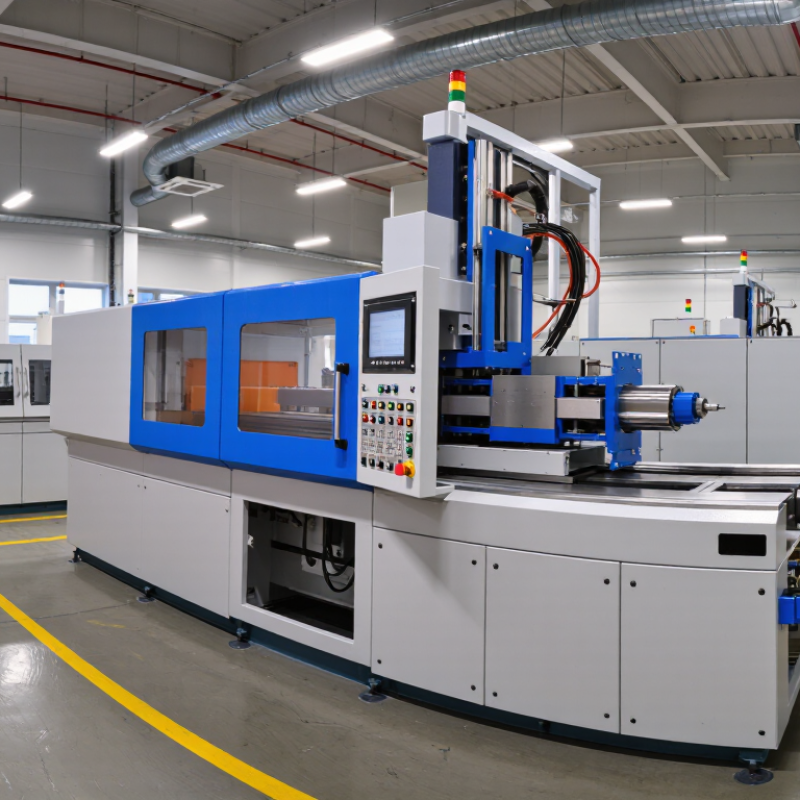
Define the Product, Material, and Production Requirements
How to Choose a Plastic Injection Molding Machine?
Define the Product, Material, and Production Requirements
Start with the part, not the machine catalog. Measure its length, width, height, and wall thickness, then estimate its projected area and shot volume. A thin-walled housing may need fast, consistent filling, while a thick component may require longer cooling. Note any tight tolerances, visible surfaces, inserts, or side features. These details affect clamping force, injection capacity, and mold design. Small details matter.
Identify the exact resin grade, including any fillers or additives. A glass-filled material may need more wear-resistant components than an unfilled resin. Check the supplier’s recommended melt and mold temperatures, drying needs, and processing window. Then discuss those figures with the machine supplier or process engineer. Resin names alone are not enough; grades can behave differently. I once treated two similar materials as interchangeable, and the trial required more adjustment than expected.
Tips: Estimate annual demand and target cycle time, but leave room for setup, maintenance, and rejected parts. Confirm that the machine can deliver the required shot without running near its limits. Ask how the proposed settings were calculated, and request a trial using the intended mold and material. A neat spreadsheet helps. It can still miss a real production constraint.
Calculate the Required Clamping Force and Shot Capacity
How to Choose a Plastic Injection Molding Machine?
Calculate the Required Clamping Force and Shot Capacity
Estimate clamping force from the part’s projected area, including runners, multiplied by the material’s cavity-pressure requirement. The projected area is the part’s silhouette viewed along the mold-closing direction—not its surface area. A practical preliminary estimate often uses 2–5 tons per square inch, but the correct value depends on resin, wall thickness, flow length, and mold design. This range is a sizing rule of thumb, not a substitute for process data. The Society of Plastics Engineers’ injection-molding references emphasize matching machine settings to material and part conditions. For example, a wide, thin-wall housing may need more clamp force than its weight suggests. Too little invites flash; too much can stress the mold.
Size shot capacity by comparing the complete shot—parts, runners, and any cold-slug wells—with the machine’s usable barrel capacity. Machinery sizing guidance commonly recommends using roughly 20–80% of rated shot capacity; staying near the middle can improve control and reduce residence-time concerns. Check the resin supplier’s processing guidance, since heat-sensitive materials may need a smaller shot fraction. Convert shot weight carefully: machine ratings may use a reference resin, while your material’s density differs. Leave a measurable cushion at the end of injection. A cushion that disappears unpredictably is a warning, not a production target. These calculations are a starting point; actual fill pressure, parting-line behavior, and molded dimensions should be verified in trials.
How to Choose a Plastic Injection Molding Machine?
Calculate the Required Clamping Force and Shot Capacity
Clamping-force estimates use projected part area multiplied by an assumed average cavity pressure of 40 MPa, then convert the result to metric ton-force. Shot mass represents the estimated total shot, including parts and runners. These examples are for preliminary comparison only; actual requirements depend on the material, mold, process conditions, and machine specifications.
Match Injection Performance to Part Design and Resin
How to Choose a Plastic Injection Molding Machine?
Match Injection Performance to Part Design and Resin
Choose a machine around the part’s flow path, wall thickness, and resin—not just its clamp tonnage. PlasticsEurope’s Plastics—The Fast Facts 2023 report estimated global plastics production at 400.3 million tonnes in 2022, reflecting a wide range of materials with different processing needs. A thin-walled housing may need fast, stable injection, while a thick component may need controlled filling and packing. Check the resin’s technical data sheet for melt temperature, drying requirements, recommended injection conditions, and shrinkage. Then compare these with the machine’s actual injection rate, pressure, and shot capacity. A large shot alone proves little.
Match the screw and barrel to the resin and shot size. A screw that is poorly suited to the material can cause inconsistent melting, long residence time, or degraded parts. For glass-filled resin, review screw design and wear resistance; for moisture-sensitive resin, confirm that drying and material handling are controlled. The ISO 294-4 test method measures molding shrinkage, a useful reminder that dimensions depend on processing conditions as well as mold design. Run a trial using the intended resin and representative part geometry. Measure the fill pattern, part weight, and critical dimensions. Real parts can disagree with the data sheet. That is worth investigating, not ignoring.
Compare Machine Types, Controls, and Energy Requirements
How to Choose a Plastic Injection Molding Machine?
Machine type shapes the entire production process. Hydraulic machines provide strong clamping force and can suit large parts or demanding applications. Electric machines often deliver precise movement and repeatable cycles, while using less energy during many operations. Hybrid machines combine features of both, but their actual performance depends on the design and production setup.
Match the machine to the part, mold, and expected output. Check shot capacity, tie-bar spacing, platen size, and clamping force against the mold’s requirements. A machine that is too small may struggle to fill the part; an oversized one can waste energy and floor space. Controls matter, too. Look for clear displays, adjustable process settings, and useful alarms. Operators should be able to track pressure, temperature, and cycle time without digging through confusing menus. Test the controls during a trial run. Small interface problems become tiring over a full shift.
Tips: Compare energy use across the full cycle, not just the motor rating. Ask for production data using a similar material and part size. Watch the machine run, and note idle time, noise, and temperature stability. Estimates can be imperfect; real workloads often differ from supplier calculations. That is worth questioning.
How to Choose a Plastic Injection Molding Machine? – Compare Machine Types, Controls, and Energy Requirements
| Machine type |
How it works |
Control characteristics |
Energy profile |
Typical strengths |
Points to consider |
| Hydraulic |
Hydraulic pumps and cylinders provide injection, clamping, and other machine movements. |
Modern controls can set and monitor injection speed, pressure, clamp force, temperatures, and cycle stages. Response and repeatability depend on the machine and its control system. |
A conventional fixed-speed pump may use power even when demand is low. Variable-pump or servo-driven hydraulic systems can reduce idle and part-load consumption. |
Often suited to high clamping forces, robust general-purpose production, and applications where initial purchase cost is a key consideration. |
Account for hydraulic oil, filtration, heat removal, leak prevention, and routine maintenance. Energy use varies substantially by pump design and operating profile. |
| All-electric |
Electric servo motors and ball screws drive the main machine movements; no hydraulic circuit is used for those movements. |
Servo drives allow precise, programmable movement and can support repeatable control of injection, clamping, and metering. Suitability for a process depends on required force, speed, and machine design. |
Typically uses less energy than a conventional fixed-speed hydraulic machine in many applications because motors can draw power in response to demand. Actual savings are process- and machine-dependent. |
Often selected for precision parts, frequent cycling, clean production areas, and processes where lower oil-related maintenance is desirable. |
Compare purchase cost, available clamping force, injection performance, and service support. High-speed or high-force requirements should be checked against the specific machine's specifications. |
| Hybrid |
Combines electric drives for selected movements with hydraulic power for others; the configuration differs among machine designs. |
Electronic controls coordinate electric and hydraulic functions. Check which movements are electrically driven and how the machine controls pressure, speed, and repeatability. |
Can use less energy than a conventional fixed-speed hydraulic machine, particularly when the design applies variable-speed pumps or electric drives to high-demand movements. Results depend on the cycle. |
May balance hydraulic force capability with the efficiency or motion control of electric drives. |
“Hybrid” describes different configurations, so compare the drive layout, maintenance needs, and measured energy data rather than relying on the category name alone. |
| Vertical injection molding machine |
The injection unit is arranged vertically; clamping and drive systems may be hydraulic, electric, or hybrid. |
Control functions depend on the drive system and application. Options may include programmable injection profiles, clamp settings, and interfaces for inserts or automation. |
Energy use is determined mainly by the selected drive system, machine size, process settings, and cycle—not by vertical orientation alone. |
Useful for insert molding and some overmolding tasks because the vertical arrangement can make loading inserts into an open mold convenient. |
Confirm operator access, guarding, cycle time, mold layout, and whether a rotary or shuttle table is needed for the production method. |
Selection note: Match the machine to the material, part dimensions and weight, projected area, required clamping force, mold, cycle time, and quality tolerances. Compare energy using a measured or quoted value for the same part and process; electricity demand can change with resin, barrel temperatures, cooling, auxiliary equipment, and production rate.
Verify Machine Compatibility, Safety, and Lifecycle Costs
Before comparing prices, match the machine to the part and mold. Check required clamping force, shot volume, platen dimensions, tie-bar spacing, and mold height. A mold that fits the platen may still be too wide for the tie bars. Ask the supplier to review the mold drawing and resin specifications, then confirm the proposed settings with a trial shot. Keep a small margin in shot capacity; running near the limit can make process control less forgiving. I have seen a “close enough” fit become a costly delay. Not ideal.
Safety
Safety deserves the same attention as cycle time. Inspect guarding, interlocks, emergency stops, and access around the mold area. During a site visit, watch how operators reach controls and remove parts, not just how the machine runs with nobody nearby. Verify that the machine’s safety features suit your facility procedures, and train operators before production begins. A neat brochure cannot show every awkward reach or pinch point.
Lifecycle Costs
Estimate lifecycle costs over several years, not just the purchase price. Include expected energy use, cooling requirements, routine maintenance, spare parts, service response, and downtime. Ask for maintenance intervals and realistic utility figures under your intended operating conditions. Compare these with your current records if available. Estimates can be wrong, especially when shifts or resin grades change. That uncertainty is worth recording, rather than hiding inside a neat spreadsheet. Also consider whether local technicians can support the machine and whether common wear parts are readily available.
Conclusion
Choosing the right Plastic Injection Molding Machine starts with clearly defining the product, resin, expected production volume, and quality requirements. These details guide decisions about machine size and performance. Estimate the required clamping force from the part’s projected area and molding conditions, then confirm that the shot capacity can handle the total material needed for each cycle without exceeding the machine’s practical operating range.
Next, match injection pressure, speed, and temperature control to the part’s geometry and resin characteristics. Compare hydraulic, electric, and hybrid machine types according to process needs, control features, and energy use. Before making a decision, verify mold and auxiliary-equipment compatibility, review the machine’s safety provisions, and consider installation, maintenance, and operating costs over its expected service life. A balanced assessment helps ensure reliable production without selecting more capacity or complexity than the application requires.

 Yicai Machinery