China Top 10 Printing Press Machine Manufacturers?

Time:2026-11-02 Author:Madeline
0%

Choosing among China’s printing press manufacturers takes more than comparing prices or polished product photos. Buyers need to match machine type, print volume, materials, automation, and available support to real production demands. A press designed for long newspaper runs may not suit short-run packaging work. Small details matter: registration accuracy, changeover time, spare-part availability, and the clarity of the control interface. They affect daily output.

Printing analyst Frank Romano has offered a useful reminder: “Print is not dead; it is just changing.” That shift makes the market for Printing Press Machines worth examining closely. This guide introduces ten Chinese manufacturers and considers their product focus, technical capabilities, export experience, and after-sales service. It is a practical starting point, not a substitute for factory audits, sample testing, or a detailed quotation. A polished brochure proves little by itself. Ask for machine specifications, references from comparable buyers, and clear service terms. Some claims may sound impressive; the harder question is whether they hold up on your own materials and schedule. That takes time. No single ranking fits every buyer, and the right choice can depend on details that are easy to overlook. Compare carefully, verify what matters, and leave room to revise your shortlist.
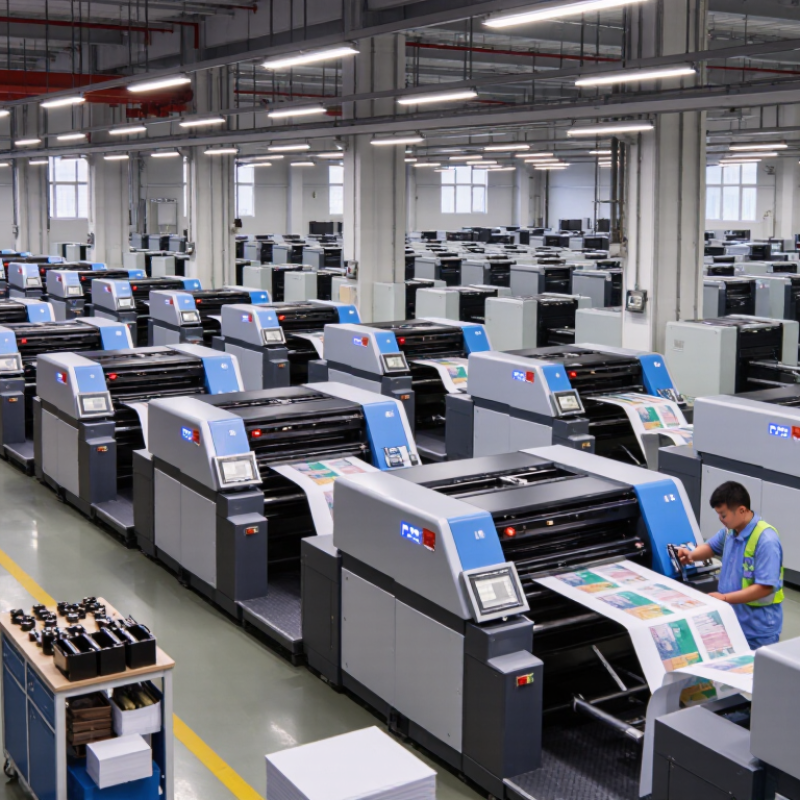
China Top 10 Printing Press Machine Manufacturers?

Scope and Structure of China’s Printing Press Machine Industry

China’s printing press machine industry is broader than a list of manufacturers suggests. Its scope includes sheet-fed and web presses, digital production systems, flexographic and gravure equipment, and finishing units such as folders and cutters. Some factories build complete lines; others specialize in control systems, rollers, feeder mechanisms, or replacement parts. This division makes the supply chain practical, but not always easy to map.

The industry connects component suppliers, machine assemblers, software integrators, dealers, and maintenance teams. Production clusters often sit near printing, packaging, and export customers, allowing equipment to be tested under real workloads. Buyers may compare speed and sheet size, yet uptime, setup waste, color stability, and operator training matter just as much. Smaller shops may need flexible machines; larger plants may prioritize automation and repeatability. This boundary is fuzzy. Public descriptions can blur the difference between a press manufacturer and a systems integrator, so rankings deserve careful checking. Factory visits, sample runs, and spare-part response times offer more useful evidence than polished catalogs alone. Even then, one test job rarely tells the whole story. Operators notice problems that brochures miss.

Criteria for Ranking the Top 10 Manufacturers

A credible ranking of China’s printing press manufacturers should begin with verifiable performance, not promotional claims. Compare press speed with print quality under realistic production conditions. Examine registration accuracy, color consistency, waste rates, and changeover time. A sample run tells more than a specification sheet alone. It also reveals whether results remain stable across different paper weights and longer shifts.

Manufacturing capability deserves close inspection. Consider component quality, assembly standards, customization options, and documented testing procedures. After-sales support matters just as much: assess response times, technician training, spare-parts access, and the clarity of maintenance guidance. Ask for service records or customer references where available. Give more weight to evidence that can be checked independently. Company-provided figures can still be useful, but they need context.

A fair scorecard should publish its criteria and explain how each factor is weighted. For example, reliability and print consistency might count more than a low purchase price. Still, it is imperfect. Buyers have different workloads, budgets, and service needs, so one ranking cannot fit every shop. Reviewers should note missing data, distinguish tested results from manufacturer claims, and update scores when machines or support arrangements change. Small differences in scoring may not justify large claims about who is “best.”

Profiles of 10 Leading Chinese Printing Press Manufacturers

China’s printing press manufacturers serve very different production needs. These ten profiles offer a practical way to compare capabilities, rather than a verified ranking. One maker may focus on sheet-fed offset presses for commercial work. Another may build web presses for long newspaper or publication runs. A flexographic specialist may prioritize flexible packaging, while a gravure-focused producer may emphasize consistent results across extended runs.

Other profiles cover digital and hybrid equipment, narrow-web label presses, and presses designed for folding cartons. Some manufacturers concentrate on automated feeding and delivery systems. Others adapt press layouts for specific factory spaces or substrates. A final group may supply broader equipment ranges, from standard configurations to custom options. Details matter. A catalogue alone cannot confirm how a press performs during a full shift.

Buyers should compare supported materials, practical operating speeds, registration accuracy, changeover time, and local service capacity. Ask for a demonstration using a substrate similar to your own, and inspect finished samples closely. No profile is perfect. Customization can add value, but it may also complicate maintenance or extend delivery schedules. Published specifications deserve careful checking against real production conditions.

China Top 10 Printing Press Machine Manufacturers? – Profiles of 10 Leading Chinese Printing Press Manufacturers

Scope note: The entries below are anonymous capability profiles by established press category, not a verified company ranking. No company or brand names are shown. Applications and equipment characteristics are general industry descriptions; individual machine specifications vary by model and configuration.

Profile Press Specialization Printing Process Typical Applications Common Substrates Key Evaluation Criteria
Profile 1 Sheet-fed offset presses Offset lithography; ink is transferred from a plate to a blanket and then to the sheet. Commercial brochures, catalogs, books, posters, and folding cartons. Coated and uncoated paper, paperboard, and selected specialty stocks. Maximum sheet format, color configuration, makeready time, registration accuracy, automation, and service support.
Profile 2 Web offset presses Offset printing from a continuous paper roll; configurations may include heatset or coldset systems. Newspapers, magazines, inserts, catalogs, and other high-volume publications. Newsprint and roll-fed printing papers. Web width, production speed, paper-break handling, drying and finishing configuration, and output consistency.
Profile 3 Digital production presses Electrophotographic or inkjet printing, generally without conventional printing plates. Short-run commercial work, books, personalized mail, and variable-data jobs. Compatible cut-sheet or roll-fed papers and selected coated media. Rated and sustained output, image quality, supported media range, variable-data workflow, and cost per printed page.
Profile 4 Packaging flexographic presses Relief printing with flexible plates; commonly supplied in central-impression, inline, or stack configurations. Flexible packaging, bags, films, labels, and packaging webs. Paper, plastic films, and other flexible web materials, subject to press configuration. Web width, color stations, registration control, drying system, changeover time, and compatibility with inks and substrates.
Profile 5 Gravure presses Intaglio printing using engraved image cells on a cylinder to transfer ink to the substrate. Long-run flexible packaging, decorative materials, and selected publication work. Films, paper, foil laminates, and other roll-fed materials. Run-length economics, cylinder preparation, color consistency, solvent or water-based ink handling, and drying controls.
Profile 6 Label presses May use flexographic, offset, digital, letterpress, or combination printing units. Product labels, pressure-sensitive labels, tags, and narrow-web packaging. Label paper, film, liner-supported stocks, and selected unsupported materials. Web width, printing-unit mix, die-cutting and finishing options, register control, and supported label materials.
Profile 7 Corrugated-board printing presses Primarily flexographic printing, often integrated with feeding, slotting, and die-cutting functions. Shipping cases, retail-ready packaging, and corrugated display packaging. Corrugated board and related paper-based packaging materials. Board thickness range, sheet size, print quality, feeding accuracy, line integration, and changeover requirements.
Profile 8 Wide-format inkjet presses Digital inkjet deposition, with equipment designed for roll media, rigid media, or both. Posters, banners, signage, exhibition graphics, and selected décor applications. Paper, vinyl, textiles, board, and other media supported by the specific ink and printer system. Maximum print width, ink type, resolution, media handling, color management, and indoor or outdoor durability needs.
Profile 9 Screen-printing presses Ink is forced through a prepared mesh screen onto the print surface. Industrial graphics, signage, specialty decoration, and printing on selected formed products. Paper, plastics, textiles, glass, and other compatible surfaces, depending on ink and press setup. Manual or automatic operation, print area, registration, material handling, curing equipment, and production repeatability.
Profile 10 Hybrid and combination presses Two or more processes—such as digital inkjet and flexography—combined in one production line. Short- to medium-run packaging, labels, and jobs requiring both variable data and finishing effects. Substrates supported by the integrated printing and finishing units. Process integration, workflow compatibility, changeover efficiency, registration across units, and total line serviceability.

Printing Technologies and Machine Types in Their Portfolios

Chinese printing press manufacturers often build portfolios around several production methods, rather than one universal machine. Offset presses suit stable, medium-to-long runs of books, catalogs, and cartons. Sheet-fed models handle paper and board, while web-fed presses can support continuous production. Digital presses are useful for short runs, variable text, and quick job changes. Fast changeovers matter. Flexographic machines commonly print labels, flexible packaging, and corrugated materials. Gravure presses target long runs where consistent image quality is important. Screen printing serves selected applications requiring heavier ink deposits or printing on shaped surfaces. The range is broad.

Portfolios may extend beyond presses to coating, laminating, die-cutting, folding, and binding equipment. These stages affect delivery speed and finished quality, so buyers should check whether machines connect smoothly with existing workflows.

A catalog, however, cannot prove real production performance. Ask for sample runs using your actual paper, film, or board, and inspect registration, drying, waste, and changeover time.

Specifications can look impressive on paper. Service access, operator training, spare parts, and control-system compatibility deserve equal attention. Some product listings may also group machines with very different capacities together; compare operating limits, not just machine names.

How to Compare Manufacturers by Application and Capability

China Top 10 Printing Press Machine Manufacturers? How to Compare Manufacturers by Application and Capability

A manufacturer’s ranking matters less than its fit for the job. Smithers’ The Future of Global Printing to 2028 estimates that print output value will rise from $818.7 billion in 2023 to $846.3 billion in 2028. That growth spans very different needs. A packaging converter should examine substrate range, ink compatibility, register stability, and changeover time. A commercial printer may care more about short-run setup, color consistency, and finishing integration. Match the machine to the work you actually sell.

Ask for production evidence, not just headline speed. Request a live trial using your paper, board, or film, then inspect registration, waste, and drying at the intended run length. Short runs? Changeover minutes matter. High volumes? Check sustained output, not a peak figure from a brochure. Also compare automation, operator training, spare-parts availability, and local service response. These details can decide whether a press meets delivery schedules.

A technical comparison should record measurable limits: sheet or web size, substrate thickness, color stations, achievable resolution, and acceptable defect rate. Ask how each figure was tested. One weak point: a successful factory demonstration cannot guarantee identical results in your plant. Check references with similar applications, review maintenance records, and include acceptance criteria in the purchase agreement. Be skeptical of claims that do not specify materials, run conditions, or measurement methods.

FAQS

Which printing method suits long book and catalog runs?

Offset presses suit stable, medium-to-long runs. Sheet-fed models handle paper and board; web-fed presses support continuous production.

When is digital printing a practical choice?

Digital presses work well for short runs, variable text, and quick job changes. Changeovers matter. A lot.

What materials and products suit flexographic presses?

Flexographic machines commonly print labels, flexible packaging, and corrugated materials. Check substrate range and ink compatibility before choosing.

When might gravure or screen printing be useful?

Gravure presses target long runs requiring consistent image quality. Screen printing can apply heavier ink deposits or print shaped surfaces.

What should buyers inspect during a production trial?

Use your actual paper, film, or board. Check registration, drying, waste, and changeover time at the intended run length.

Which specifications are worth comparing?

Record sheet or web size, substrate thickness, color stations, resolution, and acceptable defect rate. Ask how each figure was tested.

Should equipment beyond the press affect the decision?

Yes. Coating, laminating, die-cutting, folding, and binding equipment can affect delivery speed and finished quality. Check workflow compatibility.

How can buyers assess service and real-world performance?

Ask about operator training, spare parts, service response, and maintenance records. A polished factory demonstration proves less than it seems.

Conclusion

This article examines the scope and structure of China’s printing press machine industry, outlining the range of manufacturers and production capabilities represented in the market. It explains how to assess leading companies using practical criteria such as manufacturing experience, product coverage, technical capability, quality control, customization options, and after-sales support. The overview also introduces ten manufacturer profiles, focusing on their general areas of expertise without relying on brand promotion.

Readers will learn about the printing technologies and machine types commonly available, including equipment suited to different materials, production volumes, and print applications. Rather than treating a ranking as a one-size-fits-all recommendation, the article offers a framework for comparing manufacturers by intended use, operating requirements, and service needs. This helps buyers identify Printing Press Machines that align with their production goals and make more informed equipment choices.


Madeline

Madeline

Madeline is a dedicated marketing professional with a wealth of expertise in our company's core offerings. With a keen understanding of the industry, she brings a unique perspective to her role, consistently delivering high-quality content that highlights the superior aspects of our products. As......